The real estate industry runs on relationships, follow-ups, and timing. Whether you're a real estate investor, agent, broker, or property manager, missing a lead or delaying a response can mean losing a deal to a competitor. Many real estate businesses still rely on spreadsheets, scattered notes, and manual follow-ups to manage leads and client communication. As lead volumes grow, this approach quickly becomes difficult to scale and often results in missed opportunities, poor visibility into the sales pipeline, and inconsistent customer experiences. This is where CRM software for real estate becomes essential. A real estate CRM helps businesses capture leads, automate follow-ups, track property inquiries, manage deals, and centralize communication across channels such as email, phone, and WhatsApp. However, not every CRM is built for the unique needs of the real estate industry. Investors may need deal tracking and investor management capabilities, while agents and brokers often prioritize lead nurturing, property matching, and automated communication workflows. In this guide, we'll explore how to choose the best CRM software for real estate in 2026, the features that matter most, common mistakes to avoid, and how to find a solution that supports your business growth and sales goals.
Challenges Faced in Real Estate Business Without a CRM
Managing a real estate business without a CRM can quickly become overwhelming as lead volume grows and operations become more complex. Relying on spreadsheets, sticky notes, emails, and manual processes often leads to missed opportunities and inefficiencies. Some of the most common challenges include:
A CRM helps solve these problems by centralizing data, automating workflows, and giving investors complete visibility into their sales pipeline and customer interactions.
Signs That You Need a CRM For Your Real Estate
As your real estate investment business grows, managing leads and deals manually becomes increasingly difficult. If you're experiencing any of the following challenges, it may be time to invest in a CRM solution. Common signs that you need a CRM include:
A CRM helps centralize customer information, automate repetitive tasks, improve team collaboration, and ensure that no opportunity slips through the cracks as your business scales.
What You Can Do With Real Estate CRM SoftwareNot all CRMs are created equal, and real estate investors have unique needs that generic CRM software may not address. The perfect CRM for real estate investors is one that streamlines your workflow, centralizes critical information, and helps you close deals faster. Here’s what sets an ideal real estate CRM apart: 1. Centralized Lead and Contact ManagementA real estate CRM software should store all your leads, investors, sellers, and buyers in one place. This allows you to:
2. Deal and Pipeline TrackingManaging multiple deals simultaneously can get chaotic. The right CRM lets you:
3. Automation and Task ManagementTime is money. A CRM software tailored for real estate should:
4. Reporting and AnalyticsAn effective CRM provides actionable insights, helping you make smarter investment decisions:
5. Mobile Accessibility and IntegrationsReal estate is on-the-go. The perfect CRM allows you to:
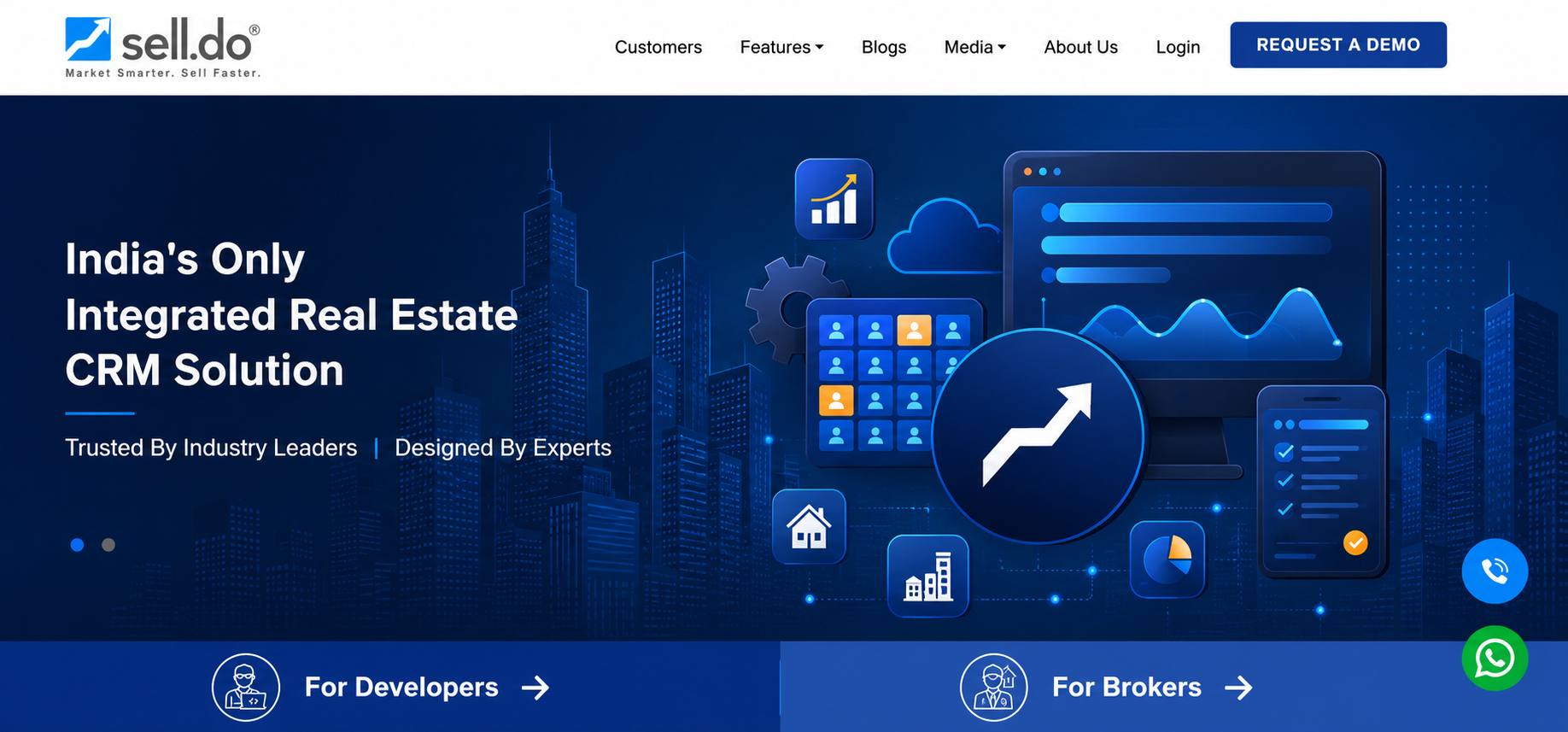
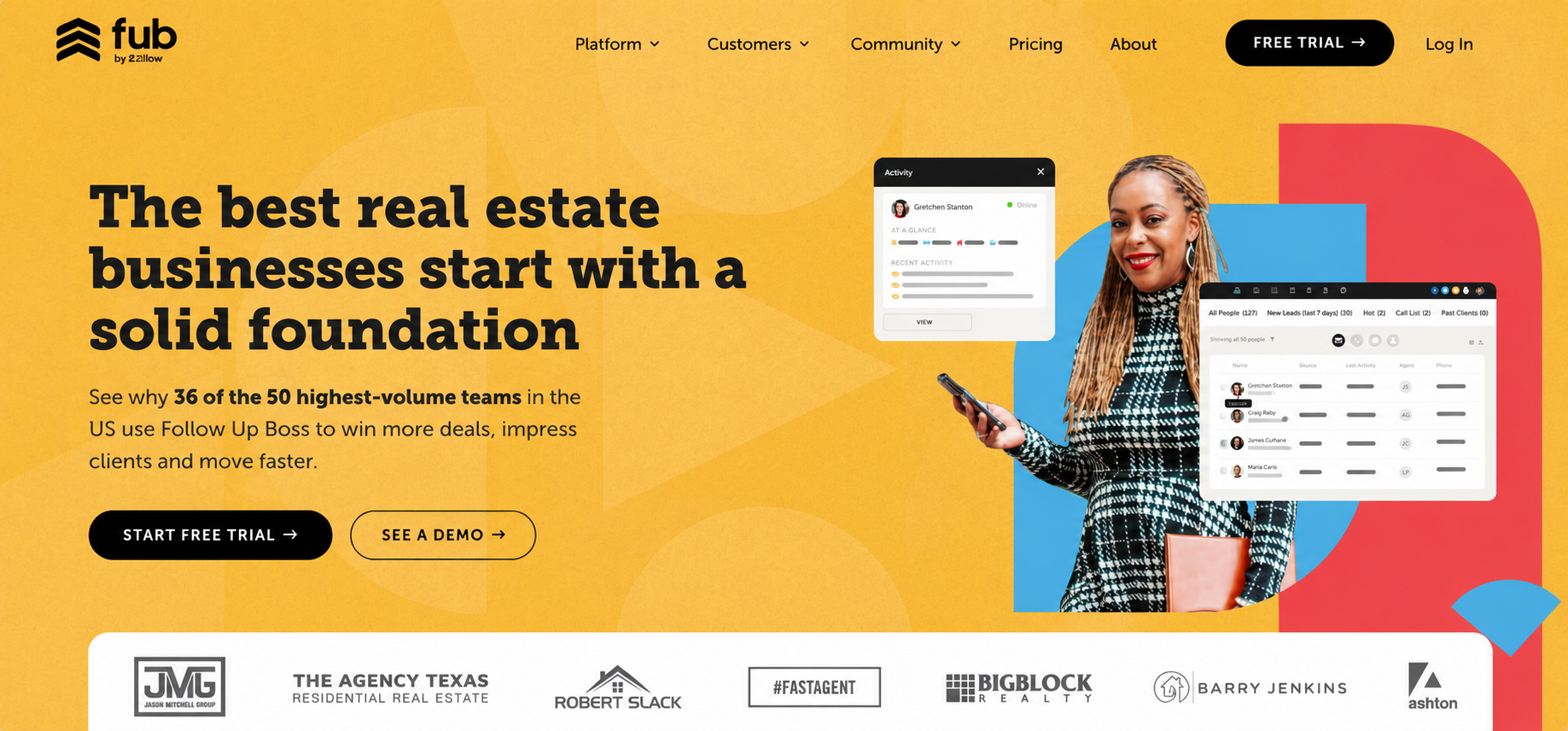
With FAB Builder CRM Software, real estate businesses get everything they need to streamline operations and accelerate sales growth. Manage property listings, capture and nurture leads, automate follow-ups, schedule site visits, and engage buyers across multiple channels from a single platform. Gain real-time insights into customer interactions and sales performance while delivering a seamless buying experience. Whether you're a real estate developer, broker, or agency, FAB Builder helps you close deals faster and manage your business more efficiently. List of Best CRM Software for Real Estate in 20261. REsimpli 2. SalesForce 3. Pipedrive 4. FAB CRM 5. InvestorFuse 6. Real Geeks 7. REISift 8. Sell.do 9. Followup Boss 10. Hubspot CRM Software For Real Estate: Key Features, Use Cases and Pricing At A Glance
Choosing the right CRM can transform how you manage leads, track properties, automate workflows, and close more deals. Below are some of the top CRM platforms real estate investors should consider in 2026, from investor‑focused systems to scalable enterprise tools. 1. REsimpli — All‑in‑One Investor CRM |


| Evaluation Criteria | Why It Matters |
|---|---|
| Lead Capture & Management | Ensures no leads are missed from websites, ads, or referrals |
| Automation Features | Saves time with automated follow-ups and reminders |
| Pipeline & Deal Tracking | Helps monitor deals from inquiry to closing |
| Email & WhatsApp Integration | Centralizes customer communication in one place |
| Property Management Features | Useful for tracking listings, inventory, and projects |
| Reporting & Analytics | Provides insights into sales performance and ROI |
| Team Collaboration | Enables seamless coordination between agents and teams |
| Customization Options | Allows workflows to match your business processes |
| Mobile Accessibility | Helps sales teams work on the go |
| Third-Party Integrations | Connects with marketing, accounting, and business tools |
| Scalability | Supports future growth and larger teams |
| Pricing & Support | Ensures the CRM fits your budget and support requirements |
Why FAB CRM Software is Perfect for Real Estate Businesses
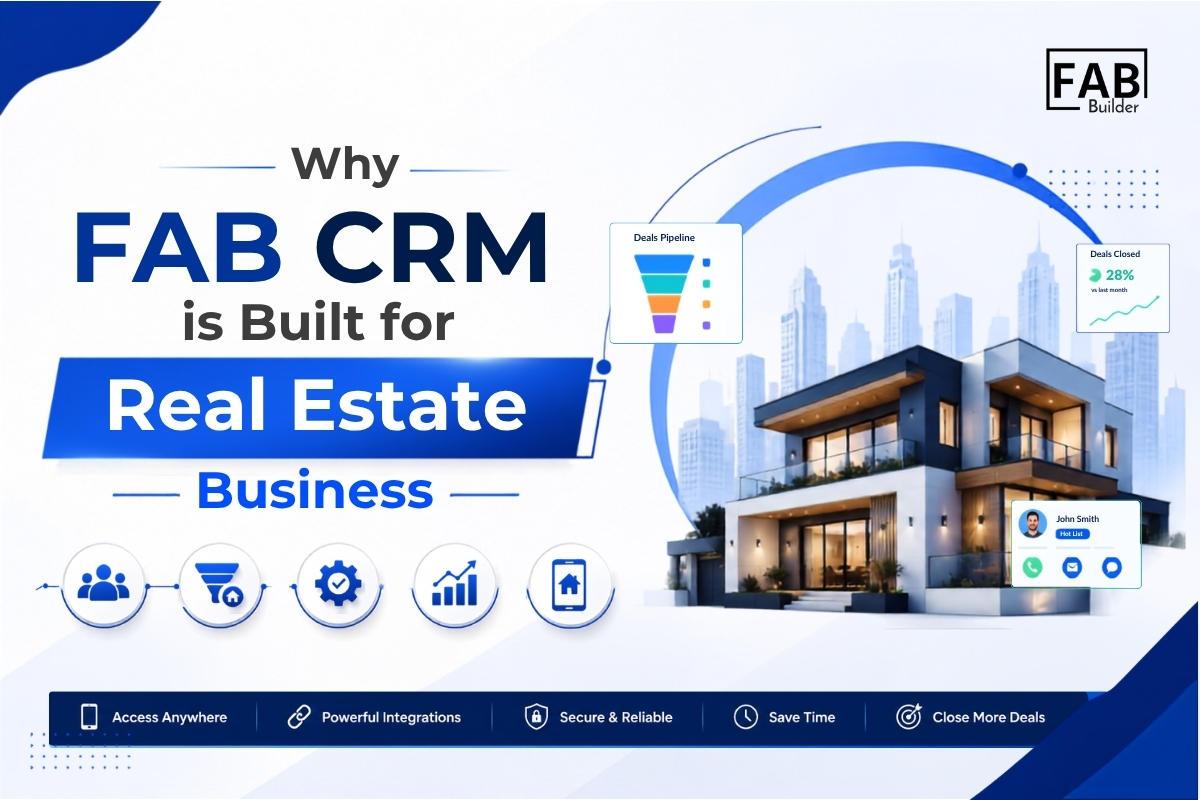
Real estate businesses need more than a traditional CRM. From managing inquiries and follow-ups to tracking deals and customer communication, FAB CRM is designed to simplify complex real estate workflows and help teams close deals faster.
Lead Automation
Automatically capture, assign, and nurture leads from multiple sources without manual effort.
WhatsApp Integration
Engage prospects and customers directly through WhatsApp for faster communication and higher response rates.
Custom Workflows
Build workflows that match your sales process, whether you're an investor, broker, agent, or developer.
Omnichannel Communication
Manage conversations across email, WhatsApp, phone calls, and other channels from a single platform.
Pipeline Management
Track every opportunity from the first inquiry to deal closure with customizable sales pipelines.
No-Code Customization
Modify fields, workflows, and dashboards without writing code or relying on developers.
Own Your Data
Maintain full control over your customer data with flexible deployment and data ownership options.
Whether you're managing property inquiries, investor pipelines, or sales teams, FAB CRM provides the tools needed to streamline operations and accelerate growth.
Questions to Ask Before Purchasing a CRM
Before investing in a CRM, it's important to evaluate whether the platform aligns with your business processes, team requirements, and long-term growth plans. Asking the right questions can help you avoid costly migrations and ensure you choose a solution that delivers real value.
Consider the following questions before making your decision:
- Does the CRM support your real estate investment workflow?
- Can it automate follow-ups, reminders, and repetitive tasks?
- Is the platform easy for your team to learn and adopt?
- Does it integrate with your existing tools and marketing platforms?
- Can the CRM scale as your business and lead volume grow?
- Does it provide reporting and analytics to measure performance?
- Is there a mobile app for managing leads and deals on the go?
- What level of customization does the platform offer?
- How responsive is the customer support and onboarding team?
- Does the pricing fit your budget and expected return on investment?
Taking the time to answer these questions will help you select a CRM that not only solves today's challenges but also supports your business as it expands.
Quick Summary: How to Choose the Best CRM for Real Estate?
Still Confused? Selecting the right CRM for real estate investors can be game‑changing—but with so many options, the decision isn’t always straightforward. To make it easier, follow this step‑by‑step framework that ensures your choice aligns with your goals, workflows, and budget.
1. Identify Your Business Needs First
Before exploring tools, clarify what you need a CRM to do. Ask yourself:
-
Am I tracking leads, deals, or both?
-
Do I need automation for follow‑ups?
-
Will I use this with a team or solo?
-
Do I need integration with other tools (email, marketing, property databases)?
Knowing your priorities will help you filter out CRMs that are overkill—or underpowered—for your real estate business.
2. Shortlist CRMs Based on Essential Features
Once you know your needs, evaluate each CRM on the core features we discussed earlier:
✔ Lead & contact management
✔ Deal & pipeline tracking
✔ Automation and workflow capabilities
✔ Reporting and analytics
✔ Mobile access and integrations
Create a checklist and score each CRM against these features to compare them objectively.
3. Evaluate Ease of Use & Onboarding
A powerful CRM is only effective if you and your team can use it. Consider:
-
Is the user interface intuitive?
-
How steep is the learning curve?
-
Does the provider offer onboarding support or tutorials?
A tool that’s easy to adopt usually leads to higher usage rates and better results.
4. Check Integration Capabilities
Your CRM should work well with tools you already use—such as:
-
Email platforms (Gmail, Outlook)
-
Marketing tools (Mailchimp, ActiveCampaign)
-
Property search or listing services
-
Calendars and task apps
Seamless integrations save time by reducing manual data entry and keeping workflows centralized.
5. Consider Scalability & Customization
Your real estate CRM should grow with your business:
-
Can you add users easily?
-
Can you customize deal stages, fields, and dashboards?
-
Does it offer advanced features as your needs expand?
If you plan to scale or build a team, choose a CRM that supports future growth without forcing you to switch later.
6. Review Support & Training Resources
Reliable customer support and training resources are essential, especially if you’re new to CRMs. Look for:
-
Live chat or phone support
-
Knowledge base articles and video tutorials
-
Onboarding sessions or setup wizards
Great support accelerates your setup and helps resolve issues faster.
7. Compare Pricing & ROI
Price shouldn’t be the sole deciding factor, but it matters. Compare:
-
Monthly vs annual subscription costs
-
Cost per user or seat
-
Hidden fees for features or integrations
Then weigh the cost against potential ROI—how much time and productivity the CRM could save you.
8. Take Advantage of Free Trials & Demos
Before committing, use free trials or live demos to test CRMs with your real data. This helps you assess:
-
Workflow fit
-
Ease of use
-
Feature strength in real scenarios
Trying before buying ensures you don’t invest in a tool that doesn’t match your needs.
9. Read Reviews & Real‑World Use Cases
Finally, read user reviews and case studies from other real estate investors. This gives insight into:
-
What works well in real life
-
Common challenges and workarounds
-
Features real users find most valuable
Sites like G2, Capterra, and software forums are great places to start.
Conclusion
A CRM for real estate is more than just a tool—it’s a strategic partner that helps you manage leads, track deals, automate tasks, and make smarter investment decisions. Whether you’re a solo investor or managing a growing team, the right CRM can save you time, prevent missed opportunities, and ultimately boost your deal closures and ROI.
From REsimpli and Salesforce to FAB CRM and HubSpot, there are multiple options to match different workflows, budgets, and team sizes. The key is to identify your business needs, evaluate essential features, test with trials, and choose a CRM that fits your long-term growth plan.
Investing time now in selecting the right CRM will pay off in efficiency, productivity, and profitability for years to come.
Ready to take control of your real estate business?