Every business dreams of growth—but in reality, many are losing potential revenue due to scattered customer data, missed follow-ups, and inefficient sales processes. In India’s fast-growing market, where competition is fierce and customers expect instant, personalized interactions, relying on spreadsheets, WhatsApp messages, or manual notes just doesn’t cut it anymore. Imagine this: your sales team is juggling hundreds of leads from multiple channels—emails, WhatsApp, property portals, social media, and website inquiries—but there’s no centralized system to track them. Deals slip through the cracks, follow-ups are duplicated or forgotten, and valuable opportunities are lost. This is the reality for many businesses in India today. This is where CRM Software in India becomes a true game-changer. The right CRM not only centralizes customer information but also automates repetitive tasks, tracks every interaction, and provides actionable insights. It allows businesses to reduce lead leakage, increase sales efficiency, and deliver exceptional customer experiences—all while giving leadership real-time visibility into team performance. Whether you are a founder, CTO, sales manager, or project lead, implementing a CRM can transform how your organization manages leads, nurtures prospects, and closes deals. From startups trying to scale quickly to enterprises managing long sales cycles, a CRM is no longer optional—it’s essential. In this comprehensive guide, we’ll explore:
If you’re ready to take control of your leads, optimize your sales process, and boost revenue, read on—because choosing the right CRM could be the single best decision for your business this year. What is CRM Software?CRM stands for Customer Relationship Management—a technology that helps businesses manage, track, and optimize their interactions with customers and prospects. At its core, CRM software centralizes all customer information, making it accessible to sales, marketing, and support teams in one place. Why Indian Businesses Need CRM Software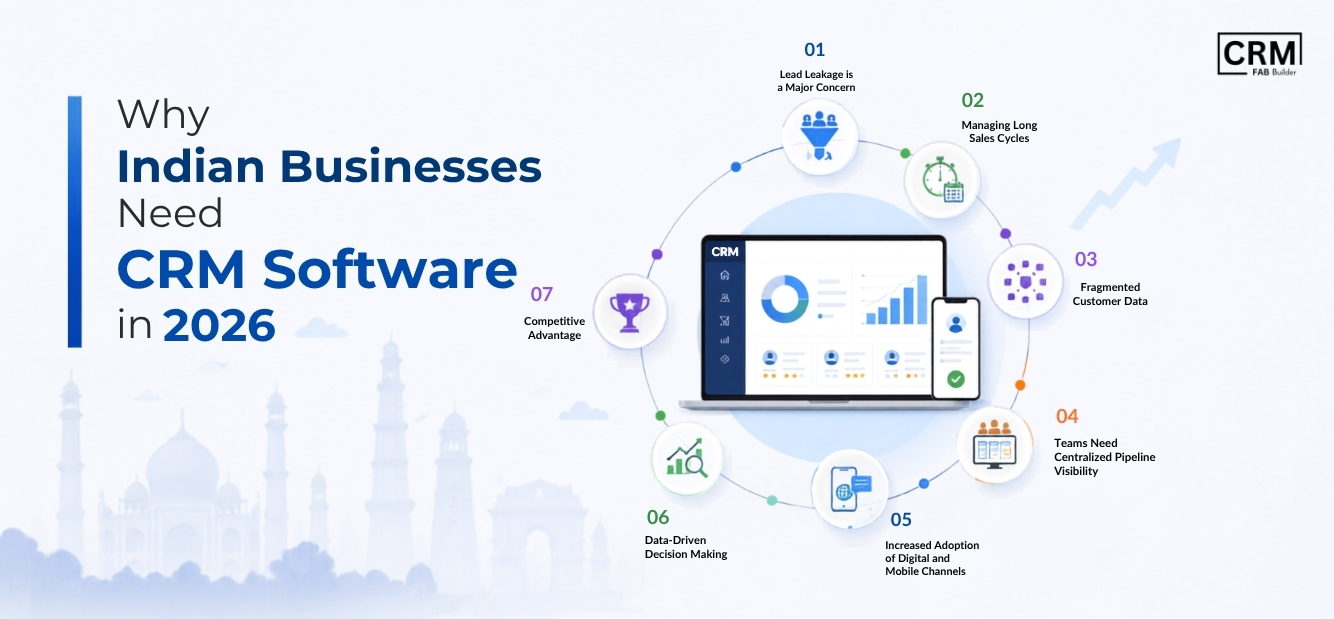 As businesses in India scale, managing leads, sales, and customer interactions manually has become increasingly inefficient. By 2026, CRM software will no longer be a luxury—it will be critical for survival and growth. Here’s why: 1. Lead Leakage is a Major Concern Many Indian businesses lose leads due to manual tracking, scattered data, or missed follow-ups. Whether it’s a WhatsApp inquiry, portal lead, or email contact, untracked leads translate into lost revenue and missed opportunities. 2. Managing Long Sales Cycles Businesses, especially in real estate, B2B, and enterprise services, often have sales cycles that span 3–12+ months. Without automated nurturing, prospects can go cold, reducing conversion rates. 3. Fragmented Customer Data Teams often rely on spreadsheets, mobile notes, or multiple tools, resulting in disconnected customer information. This fragmentation makes it impossible to get a 360° view of prospects and clients. 4. Teams Need Centralized Pipeline Visibility Agencies and sales teams with 10+ members struggle to track deal stages, assign responsibilities, and avoid duplicate follow-ups. CRM software provides real-time visibility across the pipeline. 5. Increased Adoption of Digital and Mobile Channels With WhatsApp, social media, email, and mobile apps being primary communication channels, CRM solutions help consolidate interactions and maintain consistent engagement. 6. Data-Driven Decision Making CRM software provides analytics, reporting, and AI-driven insights, allowing businesses to make smarter decisions about sales strategy, team performance, and customer engagement. 7. Competitive Advantage
By 2026, businesses that leverage CRM will have a significant edge over competitors who rely on manual processes. Faster follow-ups, personalized communication, and better visibility into sales trends can directly impact revenue growth. 10 Best CRM Software in India to ConsiderA Quick Comparison Table
Choosing the right CRM software in India can transform how your business manages leads, engages customers, and grows revenue. Below is a curated list of the top CRM solutions available today — suitable for startups, mid‑sized companies, and enterprise teams. 1. Zoho CRM — Best All‑Round CRM for Indian Businesses
Zoho CRM is one of the most widely used CRM platforms in India, especially among small and mid-sized businesses. It offers an end-to-end customer management solution covering sales, marketing, customer support, and analytics. Its biggest advantage is the deep integration with the broader Zoho ecosystem, including Zoho Books, Zoho Campaigns, Zoho Desk, and Zoho Analytics, making it a comprehensive business suite rather than just a CRM. Key Features:
Pros:
Cons:
Why it stands out: Ideal For: 2. Salesforce CRM — Enterprise‑Grade Powerhouse
Salesforce is the world’s leading enterprise CRM platform, known for its unmatched flexibility, scalability, and customization options. It supports complex sales cycles, enterprise workflows, and large customer databases. Salesforce is often used by multinational companies and large Indian enterprises that need deep analytics, AI-driven insights, and custom integrations. Key Features:
Pros:
Cons:
Why it stands out: Ideal For: 3. FAB CRM — Best CRM Software in India for Lead Management
FAB CRM is a business-focused CRM solution designed specifically for Indian sales teams dealing with high lead volumes and long sales cycles. It addresses common challenges like lead leakage, fragmented follow-ups, and a lack of pipeline visibility. FAB CRM centralizes leads from multiple sources such as WhatsApp, websites, forms, and portals, ensuring no inquiry is missed. Key Features:
Pros:
Cons:
Why it stands out:
Ideal For: 4. HubSpot CRM — Easy to Start, Simple to Scale
HubSpot CRM is known for its clean interface and strong inbound marketing capabilities. It offers a free CRM version with essential sales tools, making it popular among startups and marketing-led organizations. HubSpot excels at aligning sales and marketing teams on a single platform. Key Features:
Pros:
Cons:
Why it stands out: Ideal For: 5. Freshsales — Sales‑Driven CRM with AI
Freshsales is a sales-oriented CRM developed by Freshworks, an India-origin SaaS company. It focuses on helping sales teams close deals faster using automation, AI lead scoring, and built-in communication tools. Key Features:
Pros:
Cons:
Why it stands out: Ideal For: 6. Microsoft Dynamics 365 — CRM for Enterprise Ecosystems
Microsoft Dynamics 365 combines CRM and ERP capabilities into a single platform. It integrates seamlessly with Microsoft tools like Outlook, Teams, Excel, and Power BI, making it ideal for organizations already invested in the Microsoft ecosystem. Key Features:
Pros:
Cons:
Why it stands out: Ideal For: 7. Pipedrive — Simple & Visual Pipeline CRM
Pipedrive is a sales-focused CRM that emphasizes simplicity and visual pipeline management. It’s designed to help sales teams track deals and activities without unnecessary complexity. Key Features:
Pros:
Cons:
Why it stands out: Ideal For: 8. Kylas CRM — Cost‑Effective CRM for Indian SMEs
Kylas CRM is an India-focused CRM designed for SMBs that need essential CRM functionality without high costs. It offers core sales features with quick onboarding. Key Features:
Pros:
Cons:
Why it stands out: Ideal For: 9. SugarCRM — Flexible & Customizable CRM
SugarCRM is a flexible and customizable CRM platform that allows businesses to tailor workflows based on their internal processes. It’s often used by companies that need deeper control over CRM logic. Key Features:
Pros:
Cons:
Why it stands out: Ideal For: 10. Agile CRM — Affordable Marketing + Sales CRM
Agile CRM combines sales, marketing, and customer service tools into a single affordable platform. It’s designed for small teams that want basic automation without complexity. Key Features:
Pros:
Cons:
Why it stands out: Ideal For: Benefits of Using the Best CRM Software in India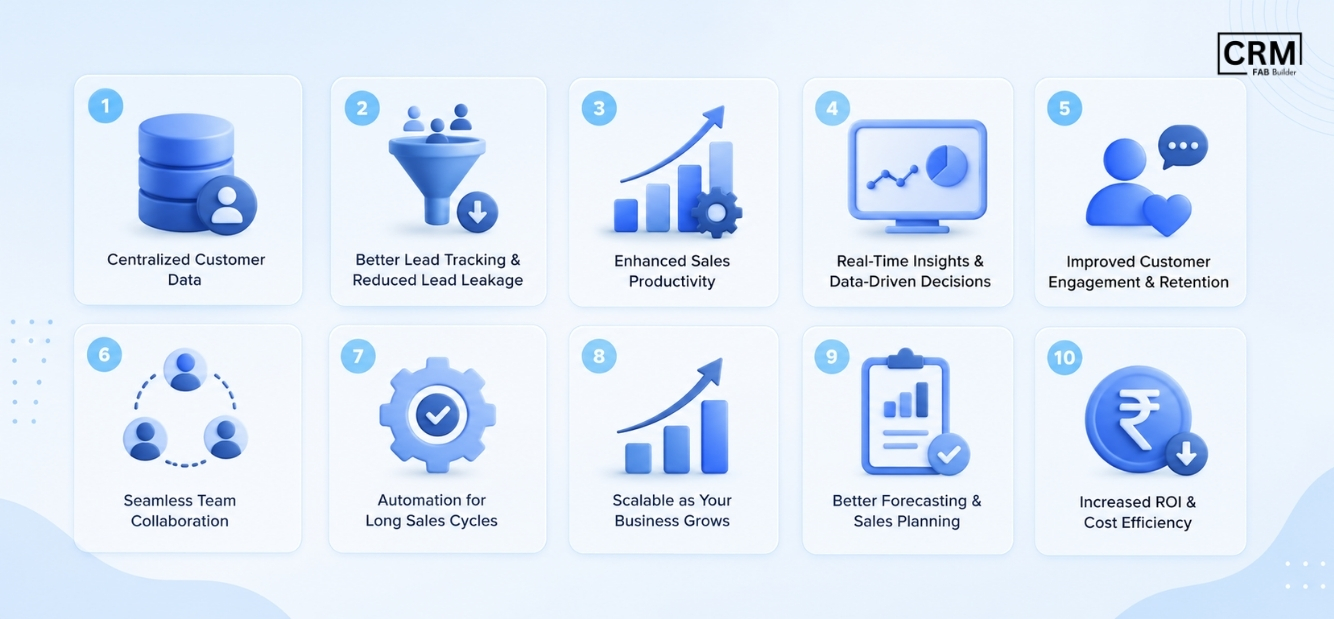 Adopting the right CRM software in India can significantly transform how your organization manages sales, customer relationships, and internal processes. The most effective CRM platforms not only centralize data but also help teams work smarter, increase revenue, and improve customer satisfaction. Below are the key benefits of crm software that businesses can expect: 1. Centralized Customer Data and Improved OrganizationA CRM system consolidates all customer information into a single platform. This eliminates scattered spreadsheets, fragmented notes, and disconnected tools. Key outcomes:
2. Better Lead Tracking and Reduced Lead LeakageWithout a CRM, leads often slip through the cracks—especially when they come from multiple sources such as email, WhatsApp, or online forms. With the right CRM:
3. Enhanced Sales ProductivityCRM software automates repetitive tasks like follow-ups, notifications, and logging interactions, freeing your sales team to focus on revenue-generating work. Benefits include:
4. Real-Time Insights and Data-Driven Decision MakingModern CRM platforms offer dashboards and reports that reveal trends in sales performance, lead quality, and team productivity. Business advantages:
5. Improved Customer Engagement and RetentionCRM tools help businesses engage customers more consistently and personally by tracking all interactions. This leads to:
6. Seamless Team CollaborationWhen sales, support, and marketing teams all access the same CRM data, collaboration improves dramatically. Team benefits:
7. Automation for Long Sales CyclesIndian businesses with lengthy sales processes—common in sectors like real estate, B2B services, and enterprise solutions—benefit greatly from automated nurturing workflows. Automated features can:
8. Scalable as Your Business GrowsThe best CRM systems scale with your business. Whether you have 10 or 1,000 employees, the platform grows with your data, users, and processes. Scalability means:
9. Better Forecasting and Sales PlanningCRM analytics allow organizations to predict sales outcomes, plan resources, and set realistic goals. With powerful forecasting:
10. Increased ROI and Cost EfficiencyImplementing the best CRM software in India often yields a strong return on investment:
How to Choose the Right CRM Software in India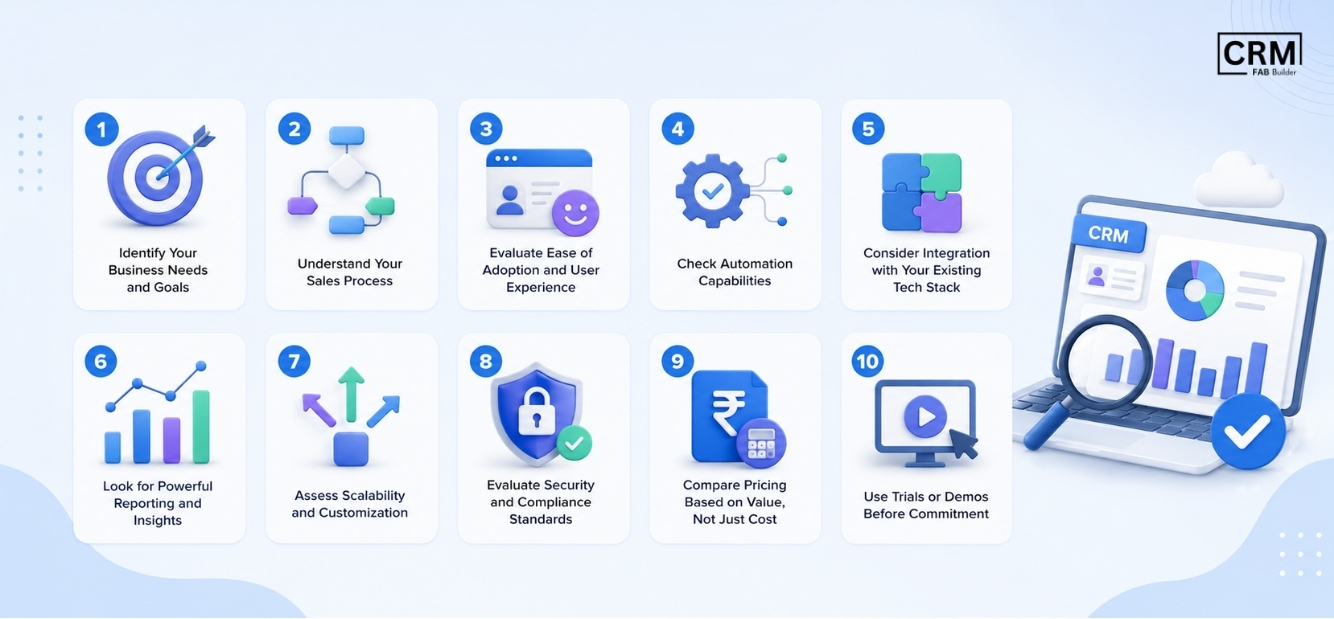 Selecting the right CRM software in India can be a game-changer for your business. But with so many options available, it’s important to make an informed decision that aligns with your goals, team workflows, and growth plans. Here’s a practical framework to help you choose the best CRM for your business. 1. Identify Your Business Needs and GoalsStart with clarity on what you want to achieve with a CRM:
Understanding your primary pain points will help you evaluate solutions more effectively. 2. Understand Your Sales ProcessEvery business has a unique sales journey. Before choosing a CRM, map your existing workflow:
A CRM that allows custom pipeline stages and adapts to your workflow will drive better adoption and results. 3. Evaluate Ease of Adoption and User ExperienceEven the most powerful CRM is only effective if your team uses it consistently. Look for:
A CRM that is easy to use means higher adoption, which directly translates to better data and outcomes. 4. Check Automation CapabilitiesAutomation is a major advantage of CRM software. The right CRM should be able to:
Automation reduces manual work and ensures no lead slips through the cracks. 5. Consider Integration with Your Existing Tech StackYour CRM should seamlessly integrate with the tools you already use:
Integration ensures data flows smoothly across systems and eliminates silos. 6. Look for Powerful Reporting and InsightsYour CRM should give you real-time visibility into your business performance. Look for:
These features empower decision-makers to take data-backed actions. 7. Assess Scalability and CustomizationAs your business grows, your CRM should grow with you. Choose software that:
A scalable CRM saves time and the cost of switching tools later. 8. Evaluate Security and Compliance StandardsData security is critical, especially when dealing with customer information. Ensure the CRM:
Security protects your business and builds customer trust. 9. Compare Pricing Based on Value, Not Just CostCRM pricing varies based on features, users, and modules. When comparing costs, consider:
A slightly higher price with better outcomes can deliver greater value over time. 10. Use Trials or Demos Before CommitmentAlways test the CRM firsthand. Most providers offer:
During a trial, assess:
Involving your sales and operations teams in trials will ensure wider buy-in and accurate evaluation. How FAB CRM Software Solves Real Business Challenges in India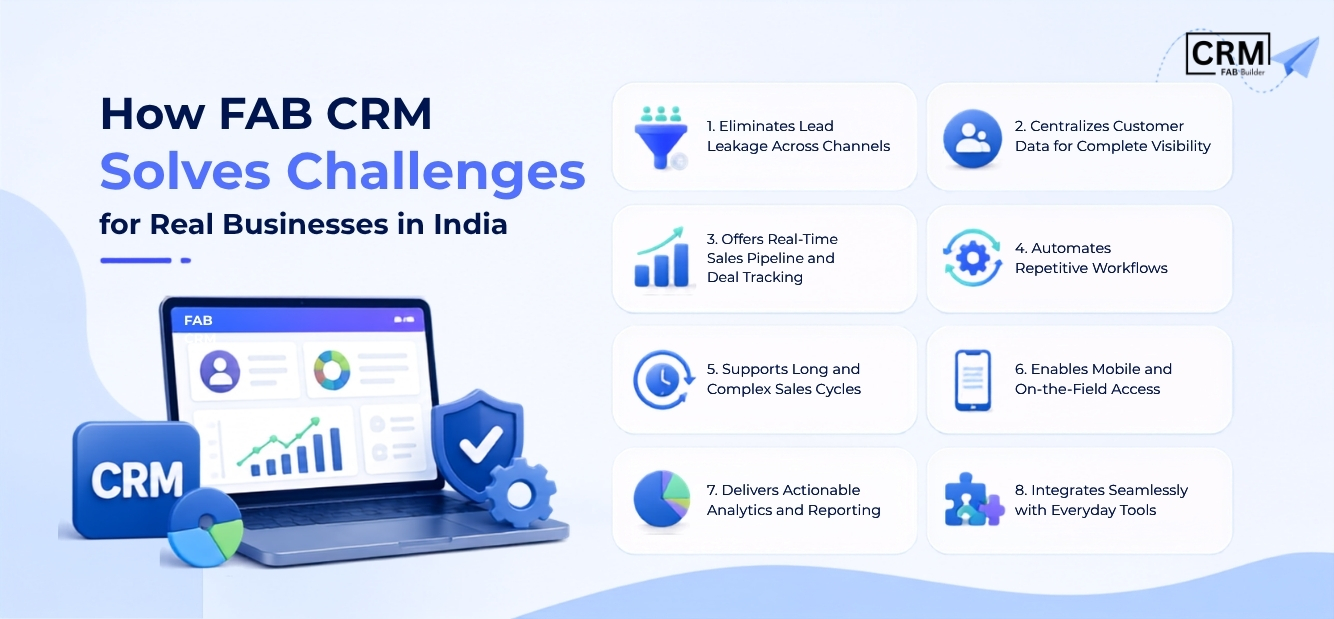 In India’s highly competitive business environment, managing customer relationships and sales pipelines efficiently is essential for growth. Many companies struggle with lost leads, fragmented data, unclear sales visibility, and long sales cycles. FAB CRM software is built to address these exact challenges — providing a centralized, scalable, and intelligent system that empowers teams to work smarter, close more deals, and deliver better customer experiences. 1. Eliminates Lead Leakage Across ChannelsOne of the biggest problems Indian businesses face is lead leakage — especially from WhatsApp enquiries, web forms, property portals, and social channels. How FAB CRM solves it:
Business impact: 2. Centralizes Customer Data for Complete VisibilityWithout a unified platform, customer data often remains in spreadsheets, emails, and notes — slowing down teams and increasing errors. With FAB CRM:
Business impact: 3. Offers Real-Time Sales Pipeline and Deal TrackingIndian sales teams — especially with 10 or more members — often lack a clear view of where deals stand. FAB CRM delivers:
Business impact: 4. Automates Repetitive WorkflowsManual follow-ups, reminders, and task tracking waste time and increase the risk of human error. FAB CRM automation features:
Business impact: 5. Supports Long and Complex Sales CyclesIndustries like real estate, B2B services, and enterprise sales often deal with sales cycles ranging from 3 to 12+ months. FAB CRM provides:
Business impact: 6. Enables Mobile and On-Field AccessIndia’s field sales teams and remote work culture demand CRM access from anywhere. FAB CRM offers:
Business impact: 7. Delivers Actionable Analytics and ReportingFlat spreadsheets and manual reports don’t provide meaningful insights. FAB CRM’s analytics help you:
Business impact: 8. Integrates Seamlessly with Everyday ToolsModern businesses use multiple software systems — from email to marketing tools. FAB CRM integrates with:
Business impact: ConclusionChoosing the right CRM software in India is no longer optional—it’s a strategic decision that directly impacts sales efficiency, customer experience, and business growth. With increasing competition, multiple lead sources, and longer sales cycles, businesses need a CRM that offers visibility, automation, and control. While many CRM tools are available, the best solution is one that fits Indian business workflows, reduces lead leakage, and helps teams work smarter—not harder. From centralized data and pipeline tracking to automation and actionable insights, the right CRM can transform how your sales and customer teams operate. If you’re looking for a CRM built to address real business challenges in India, FAB CRM is designed to help you capture every lead, streamline follow-ups, and close deals faster. Ready to see how FAB CRM can work for your business?
Book a free demo today and experience how a smarter CRM can drive better conversions, stronger relationships, and sustainable growth. |


