• Pricing
Talk to Us
Menu
Pricing

Leads are coming in, customers are growing, and teams are expanding — yet sales data lives in one tool, support conversations in another, and customer insights somewhere else entirely. Sound familiar?


This is exactly why modern businesses rely on CRM (Customer Relationship Management) software. But here’s the challenge: not all CRM systems are built the same. With multiple types of CRM software available, choosing the wrong one can result in poor adoption, missed opportunities, and wasted investment.


Business leaders often find themselves asking:

  • What is CRM, and how does it really work?

  • What are the different types of CRM software?

  • Which CRM type aligns with our business model, team size, and growth goals?

Understanding the different types of CRM is no longer optional — it’s a strategic necessity. The right CRM can streamline operations, unlock customer insights, improve collaboration, and support long-term growth. The wrong one can slow teams down and create data silos.


In this guide, we’ll break down what CRM is, explore the main types of CRM software, explain their features and use cases, and help you choose the right CRM type for your business. We’ll also show how FAB CRM brings together operational, analytical, and strategic CRM capabilities in one flexible platform — making it easier for businesses to scale with confidence.

What is CRM?

CRM stands for Customer Relationship Management. At its core, a CRM is a system that helps businesses manage, track, and improve interactions with customers and prospects throughout the entire customer lifecycle — from the first inquiry to long-term retention.


So, what are CRMs really used for?

A CRM acts as a central hub where customer data, communication history, sales activities, and support interactions are stored in one place. Instead of juggling spreadsheets, emails, and disconnected tools, teams get a single source of truth for all customer-related information.


Modern CRM software goes beyond contact management. It helps businesses:

  • Capture and organize leads

  • Track sales pipelines and deal stages

  • Automate follow-ups and tasks

  • Manage customer support tickets

  • Analyze customer behavior and performance metrics

  • Improve collaboration between sales, marketing, and support teams

CRM Types Overview

CRM Type Primary Purpose Best For Key Features
Operational CRM Streamline sales, marketing, and customer service processes Businesses focused on automation and customer engagement Lead management, sales automation, marketing automation, customer support
Analytical CRM Analyze customer data and behavior to improve decision-making Data-driven organizations and growing businesses Reporting, customer insights, forecasting, performance analytics
Collaborative CRM Improve communication and information sharing across teams Businesses with multiple departments or channels Shared customer data, team collaboration, omnichannel communication
Strategic CRM Build long-term customer relationships and improve retention Customer-centric businesses focused on loyalty and growth Customer segmentation, personalization, retention strategies
Industry-Specific CRM Address unique workflows and requirements of specific industries Real estate, healthcare, finance, and manufacturing businesses Industry workflows, custom modules, specialized integrations

CRM Software Types Explained

Not all businesses manage customers the same way — and that’s exactly why CRM software comes in different types. Depending on your business model, customer journey, and internal processes, you may need a CRM focused on automation, analytics, collaboration, or long-term strategy.


So, when people search for types of CRM software, types of CRM programs, or different types of CRMs, they are usually trying to understand how CRM systems are categorized and which one aligns best with their business goals.


Broadly, CRM systems are classified into three primary types, with some platforms offering hybrid or advanced versions:


1. Operational CRM Software
15.jpg

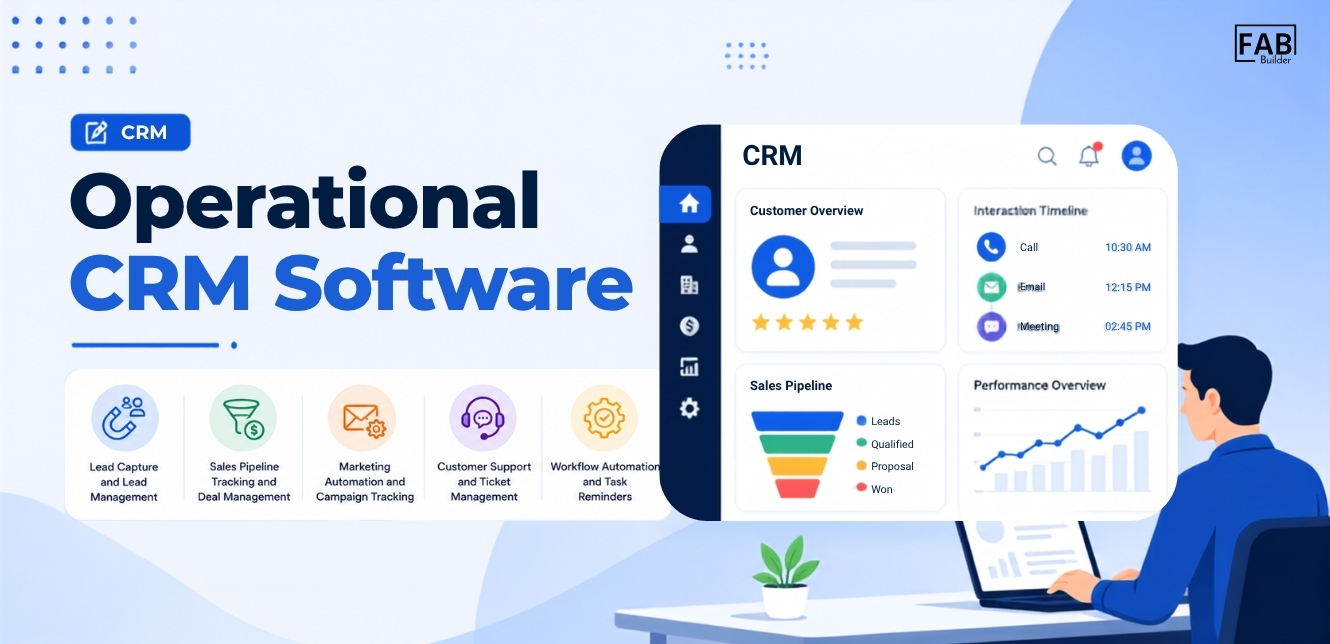
Operational CRM software is designed to support and automate daily customer-facing operations. This includes sales activities, marketing campaigns, and customer service processes.


The main objective of an operational CRM is efficiency. It helps teams reduce manual work, avoid missed follow-ups, and ensure consistent engagement with prospects and customers.


Key functions of operational CRM software include:

  • Lead capture and lead management

  • Sales pipeline tracking and deal management

  • Marketing automation and campaign tracking

  • Customer support and ticket management

  • Workflow automation and task reminders

This type of CRM program is ideal for businesses that handle a high volume of leads, inquiries, or customer interactions and need structured processes to manage them effectively.


2. Analytical CRM

16.jpg

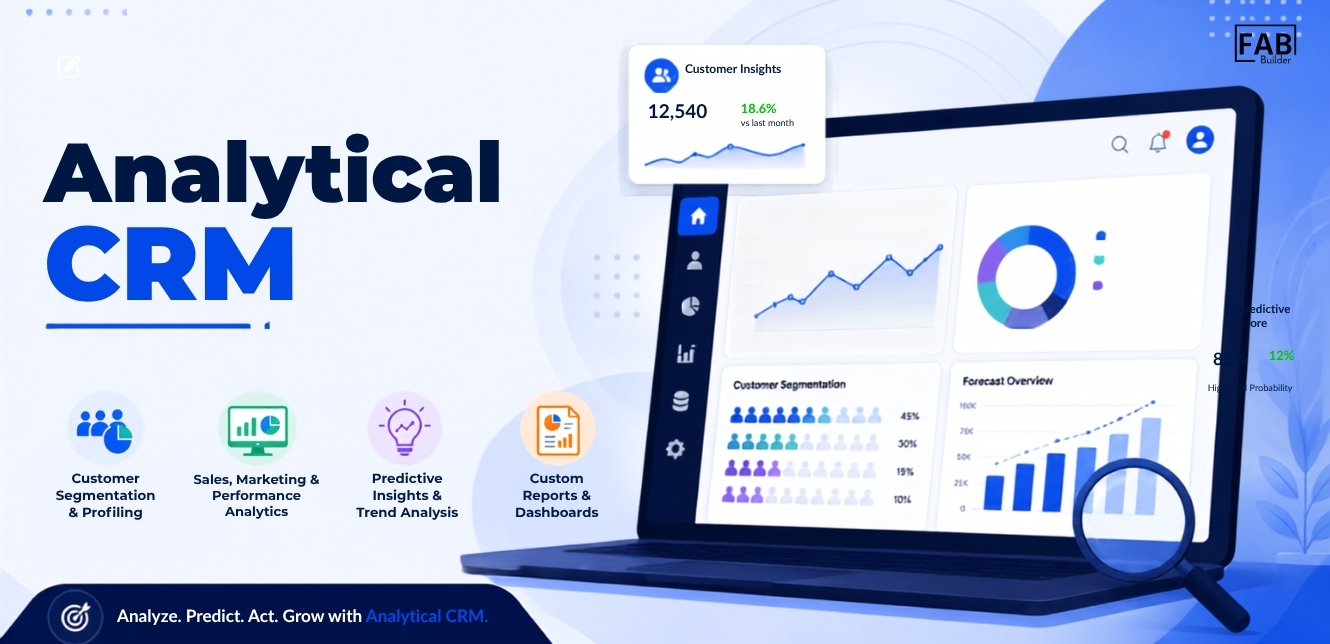
Analytical CRM focuses on collecting, organizing, and analyzing customer data to generate meaningful insights. Unlike operational CRM, which emphasizes action, analytical CRM emphasizes understanding and decision-making.


It helps businesses answer important questions such as:

  • Who are our most profitable customers?

  • Which marketing channels drive the highest conversions?

  • Where are deals getting stuck in the sales funnel?

Analytical CRM capabilities typically include:

  • Customer segmentation and profiling

  • Sales, marketing, and performance analytics

  • Predictive insights and trend analysis

  • Custom reports and dashboards

For founders, CTOs, and decision-makers, analytical CRM is critical for shaping strategy and improving ROI through data-backed decisions.


3. Collaborative CRM (Strategic CRM)17.jpg


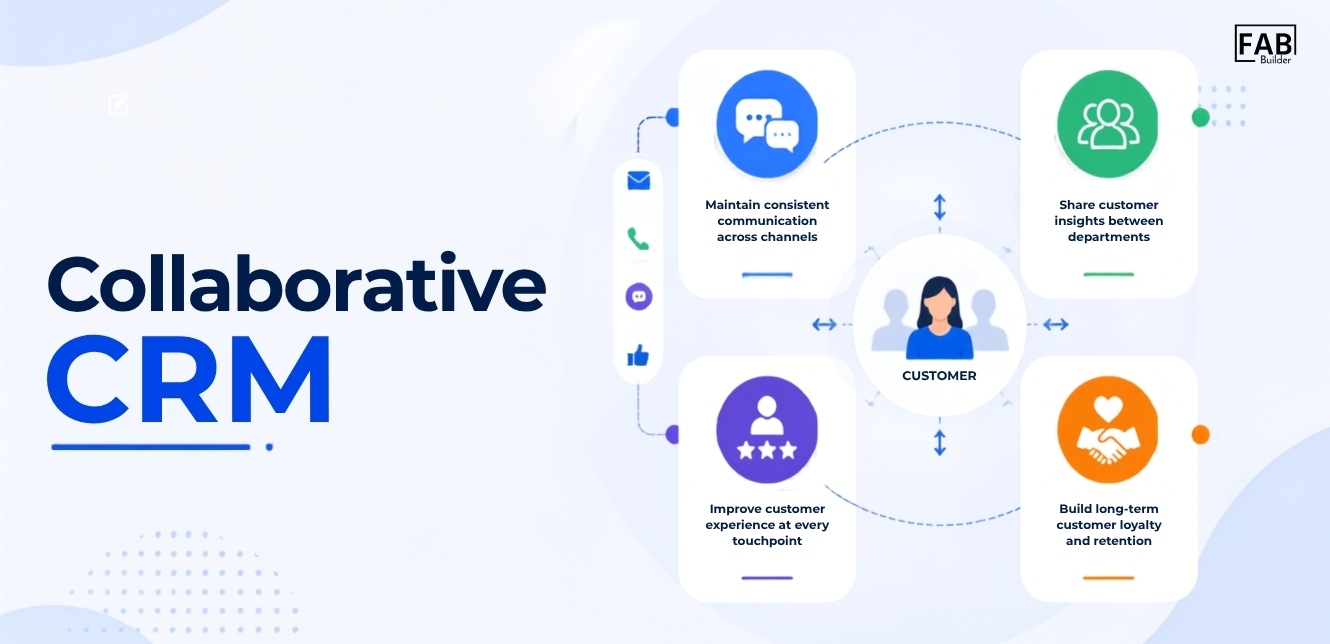
Collaborative CRM, often referred to as strategic CRM, focuses on strengthening long-term customer relationships by improving communication and collaboration across teams.


Instead of siloed information, this CRM type ensures that sales, marketing, and support teams share a single, unified view of the customer.


Collaborative CRM helps businesses:

  • Maintain consistent communication across channels

  • Share customer insights between departments

  • Improve customer experience at every touchpoint

  • Build long-term customer loyalty and retention

When people ask “what is strategic CRM?”, they are usually referring to a CRM approach that prioritizes customer value, relationship-building, and long-term engagement over short-term transactions.


Other Versions of CRM


Beyond the main categories, businesses may also encounter other versions of CRM, including:

  • Cloud-based CRM for remote and distributed teams

  • Industry-specific CRM tailored for real estate, healthcare, or finance

  • AI-powered CRM for predictive insights and automation

These versions of CRM often combine features from multiple CRM types to deliver more advanced functionality.

Essential CRM Features Every Business Should Look For

While CRM platforms come in different forms, most modern systems share a common set of core capabilities designed to help businesses manage customer relationships more effectively. Understanding the features of CRM software is essential when evaluating the types of CRM software that best fit your organization.

Below are the key CRM features that business owners, founders, CTOs, and team leaders should look for:


1. Contact & Customer Data Management

At the foundation of every CRM is centralized customer data. This feature allows teams to store and manage:

  • Contact details and company information

  • Communication history (emails, calls, meetings)

  • Notes, files, and activity timelines

Having a single source of truth ensures everyone works with accurate, up-to-date customer information.


2. Lead Management & Tracking

CRM software helps capture leads from multiple sources and track them throughout the sales funnel. This feature enables:

  • Lead scoring and qualification

  • Assignment to sales representatives

  • Automated follow-ups and reminders

Operational CRM software heavily relies on this capability to ensure no opportunity is missed.


3. Sales Pipeline & Deal Management

A visual sales pipeline provides clarity into deal stages and revenue forecasts. Key benefits include:

  • Tracking deal progress in real time

  • Identifying bottlenecks in the sales cycle

  • Improving forecast accuracy

This feature is especially valuable for sales-driven organizations and fast-growing teams.


4. Marketing Automation

Many CRM systems include built-in marketing tools to streamline outreach efforts, such as:

  • Email campaigns and drip workflows

  • Audience segmentation

  • Campaign performance tracking

This allows marketing and sales teams to work in sync, improving lead conversion rates.


5. Customer Support & Ticket Management

CRM platforms often include support features that help businesses manage customer issues efficiently:

  • Ticket creation and prioritization

  • SLA tracking and escalation rules

  • Omnichannel support (email, chat, social)

This feature improves response times and overall customer satisfaction.


6. Reporting & Analytics

Analytics is a critical feature across different types of CRMs. CRM reporting tools provide:

  • Sales and marketing performance insights

  • Customer behavior trends

  • Custom dashboards and reports

Analytical CRM systems place strong emphasis on this capability to support data-driven decisions.


7. Workflow Automation

Automation helps reduce manual work and improve consistency. Common automated workflows include:

  • Task assignments

  • Follow-up reminders

  • Status updates and notifications

This feature enhances productivity and ensures processes run smoothly at scale.


8. Collaboration & Communication Tools

Collaborative or strategic CRM systems focus on enabling teamwork. Key features include:

  • Shared customer views across departments

  • Internal notes and mentions

  • Activity logs for transparency

These tools help teams deliver a seamless customer experience.


9. Integration & Customization

Modern CRM platforms integrate with tools such as:

  • Email clients

  • Accounting software

  • Marketing and customer support tools

Customization options allow businesses to adapt CRM workflows to their specific needs.

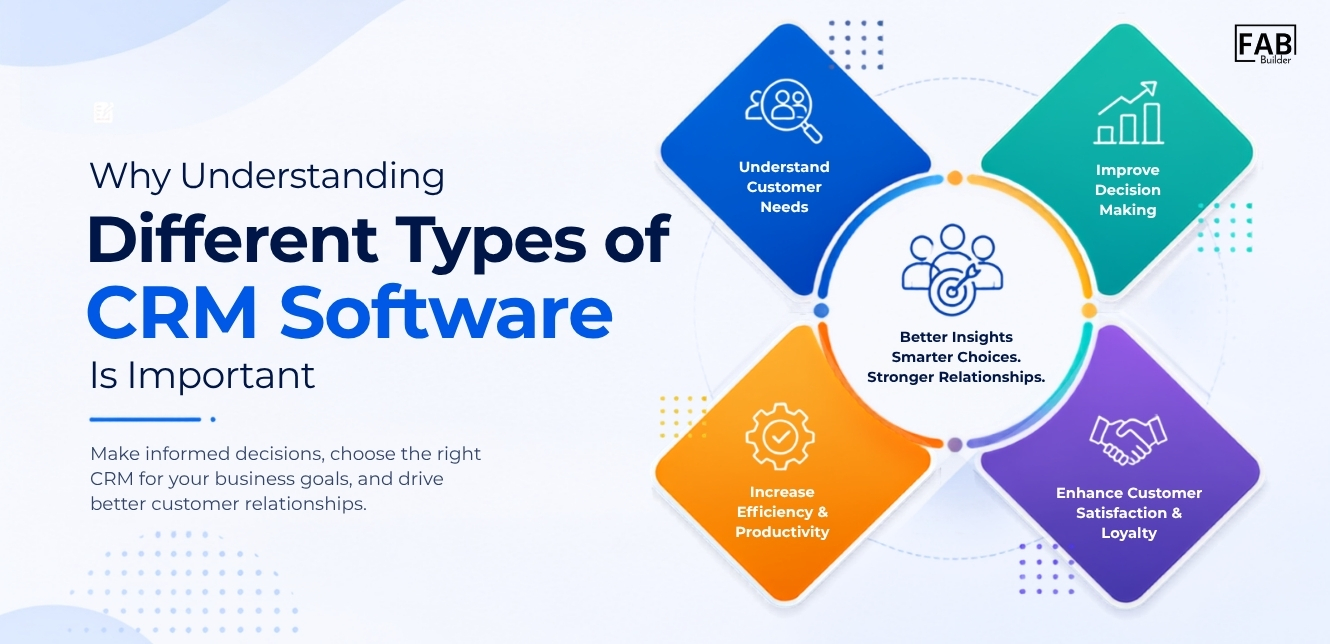
Why Understanding Different Types of CRM Software Is Important

types of crm software

Choosing a CRM is not just a software decision — it’s a business strategy decision. With multiple types of CRM software available, understanding how each type functions can mean the difference between accelerated growth and operational frustration.


Many businesses fail to get value from CRM tools because they invest in a system that doesn’t align with their workflows, team structure, or customer engagement model. This is why knowing the different types of CRM is essential before making a decision.


1. Aligns CRM Capabilities with Business Goals

Each CRM type serves a different purpose:

  • Operational CRM software focuses on automating sales, marketing, and support

  • Analytical CRM helps extract insights from customer data

  • Strategic or collaborative CRM strengthens long-term customer relationships

Understanding these differences ensures your CRM directly supports your objectives — whether that’s closing more deals, improving retention, or gaining deeper customer insights.


2. Prevents Costly Implementation Mistakes

A common mistake businesses make is adopting a CRM based on popularity rather than suitability. This often leads to:

  • Low user adoption

  • Overcomplicated workflows

  • Underutilized features

Knowing the types of CRM program available helps teams select a solution that matches their maturity level and reduces the risk of wasted investment.


3. Improves Team Productivity and Adoption

When the CRM fits naturally into existing processes, teams are more likely to use it consistently. For example:

  • Sales teams benefit most from operational CRM features

  • Leadership teams rely on analytical CRM insights

  • Customer-facing teams thrive with collaborative CRM access

Matching the CRM type to the team’s needs leads to higher adoption and better results.


4. Enables Better Customer Experience

Customers expect seamless, personalized interactions across touchpoints. A clear understanding of the different types of CRMs allows businesses to:

  • Respond faster to inquiries

  • Maintain consistent communication

  • Build trust through data-driven engagement

Strategic CRM approaches focus on long-term relationship building rather than short-term transactions.


5. Supports Scalability and Future Growth

Businesses evolve, and so do their CRM requirements. By understanding the versions of CRM, organizations can choose platforms that:

  • Start simple and expand functionality over time

  • Integrate analytics and automation as they grow

  • Support multi-team collaboration without disruption

Modern solutions like FAB CRM combine operational, analytical, and strategic CRM capabilities, allowing businesses to scale without switching platforms.

CRM Recommendations for Business Needs

Business Need Recommended CRM Type Why It Fits
Automating sales and follow-ups Operational CRM Helps manage leads, automate workflows, and streamline sales processes
Understanding customer behavior and trends Analytical CRM Provides reporting, customer insights, and performance analytics
Improving communication across teams Collaborative CRM Centralizes customer data and enables seamless team collaboration
Building long-term customer relationships Strategic CRM Focuses on customer retention, loyalty, and personalized experiences
Managing industry-specific workflows Industry-Specific CRM Offers specialized features and integrations tailored to business needs
Handling high lead volumes Operational CRM Automates lead assignment, nurturing, and conversion processes
Making data-driven business decisions Analytical CRM Helps identify trends, forecast sales, and optimize marketing efforts
Supporting multiple departments or locations Collaborative CRM Ensures all teams have access to the same customer information
Improving customer retention and engagement Strategic CRM Enables personalized communication and customer lifecycle management
Managing real estate, healthcare, or finance operations Industry-Specific CRM Provides workflows designed for specific industries

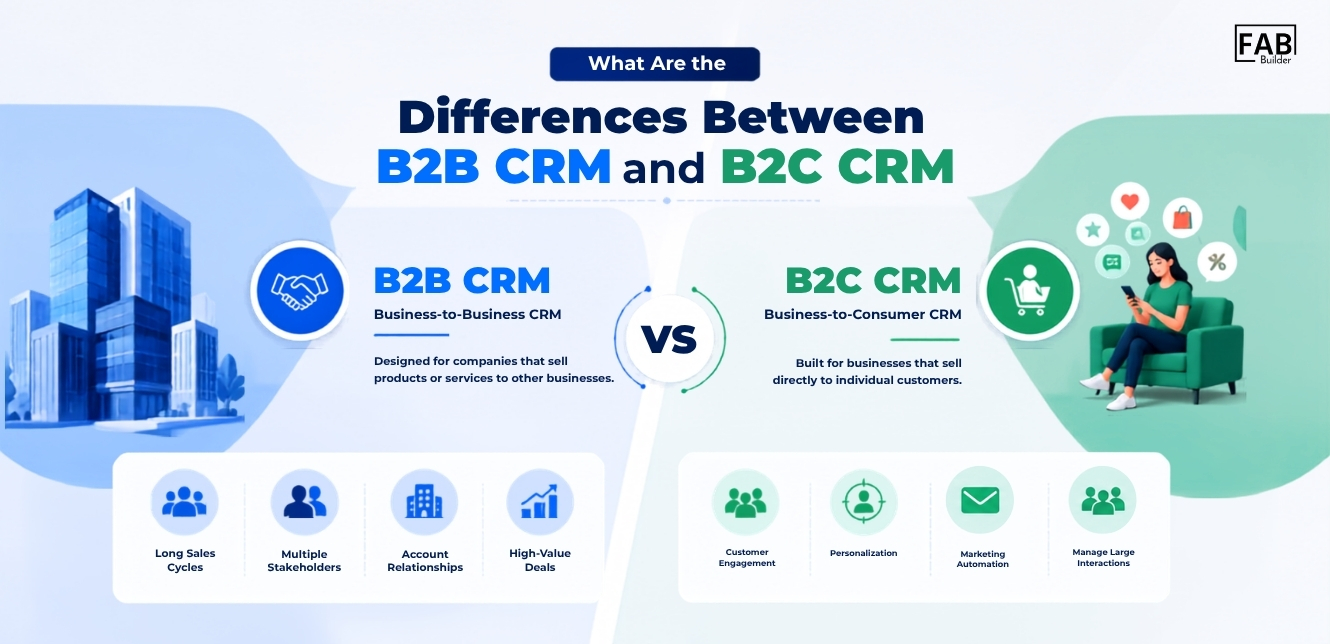
What Are the Differences Between B2B CRM and B2C CRM
b2b vs b2c crm

B2B CRM (Business-to-Business CRM) is designed for companies that sell products or services to other businesses. It focuses on managing long sales cycles, multiple stakeholders, account relationships, and high-value deals.


B2C CRM (Business-to-Consumer CRM) is built for businesses that sell directly to individual customers. It emphasizes customer engagement, personalization, marketing automation, and managing large volumes of customer interactions.

B2B CRM vs B2C CRM
FeatureB2B CRMB2C CRM
Target CustomersBusinesses, organizations, and enterprisesIndividual consumers and end users
Sales CycleLonger and more complexShorter and faster
Decision MakersMultiple stakeholders involved in purchasing decisionsUsually a single buyer or household
Relationship FocusLong-term partnerships and account managementHigh-volume customer acquisition and retention
Lead VolumeLower volume but higher-value dealsHigher volume with smaller transaction values
Sales ProcessConsultative and relationship-drivenTransactional and speed-focused
Customer DataCompany details, contacts, contracts, and account historyPersonal preferences, purchase history, and behavior
Automation NeedsLead nurturing, account management, and pipeline trackingMarketing automation, personalization, and customer engagement
Communication ChannelsEmail, meetings, calls, and account-based marketingEmail, SMS, social media, chat, and mobile apps
Key MetricsDeal value, pipeline growth, customer lifetime value, renewal ratesConversion rate, repeat purchases, retention, and customer satisfaction
ExamplesSaaS companies, manufacturers, consulting firms, wholesalersE-commerce, retail, travel, and subscription businesses
CRM ExamplesSalesforce, HubSpot, Microsoft DynamicsHubSpot, Zoho CRM, Shopify-integrated CRMs

Conclusion

Understanding the types of CRM software is the foundation of building stronger customer relationships and scaling your business with confidence. From operational CRM software that streamlines daily activities, to analytical CRM that delivers actionable insights, and strategic (collaborative) CRM that focuses on long-term customer value — each CRM type serves a distinct purpose.


The key takeaway is simple: there is no one-size-fits-all CRM. The right CRM depends on your business goals, team structure, customer journey, and growth plans. By clearly understanding the different types of CRMs and how they work, you can avoid costly mistakes and invest in a CRM that delivers real, measurable impact.


This is where FAB CRM stands out. Designed to support multiple CRM types in a single platform, FAB CRM brings together operational efficiency, analytical intelligence, and strategic collaboration — giving businesses the flexibility to start small and scale without limits.


Ready to Choose the Right CRM for Your Business?


Whether you’re a startup, growing business, or enterprise, FAB CRM adapts to your needs, not the other way around.


Explore FAB CRM to streamline customer management, improve team productivity, and build lasting customer relationships — all from one powerful CRM platform.

DISCOVERCase StudiesPricingTerms & ConditionPrivacy Policy
SERVICESCustomizationHostingConsultationProfessional ServicesHire a Developer
ECOSYSTEMHackathonKnowledgeAffiliate
PRODUCTFAB StudioFAB CRMAnalyticsPage Pilot
CONNECTWhatsApp CommunityDiscord CommunityBlogsLinkedInTwitterFacebookYouTubeInstagram
COMPANYAbout UsCareerInvestorSupportContact Us
Copyright 2026 ©. All right reserved.