Running a business today means managing far more than just customers. Companies need tools for accounting, sales, CRM, project management, invoicing, workflow automation, customer communication, and reporting—all while keeping operations simple and scalable. Three platforms that frequently appear in business software discussions are Zoho, QuickBooks, and FAB CRM. While they share some overlapping capabilities, they were built with different priorities.
Choosing between them isn't simply about features. It depends on:
This comparison analyze search platform from multiple perspectives, including features, usability, pricing, automation capabilities, customer reviews, community feedback, and real-world business scenarios. Rather than declaring a single winner, the goal is to help you determine which solution best fits your specific business needs.
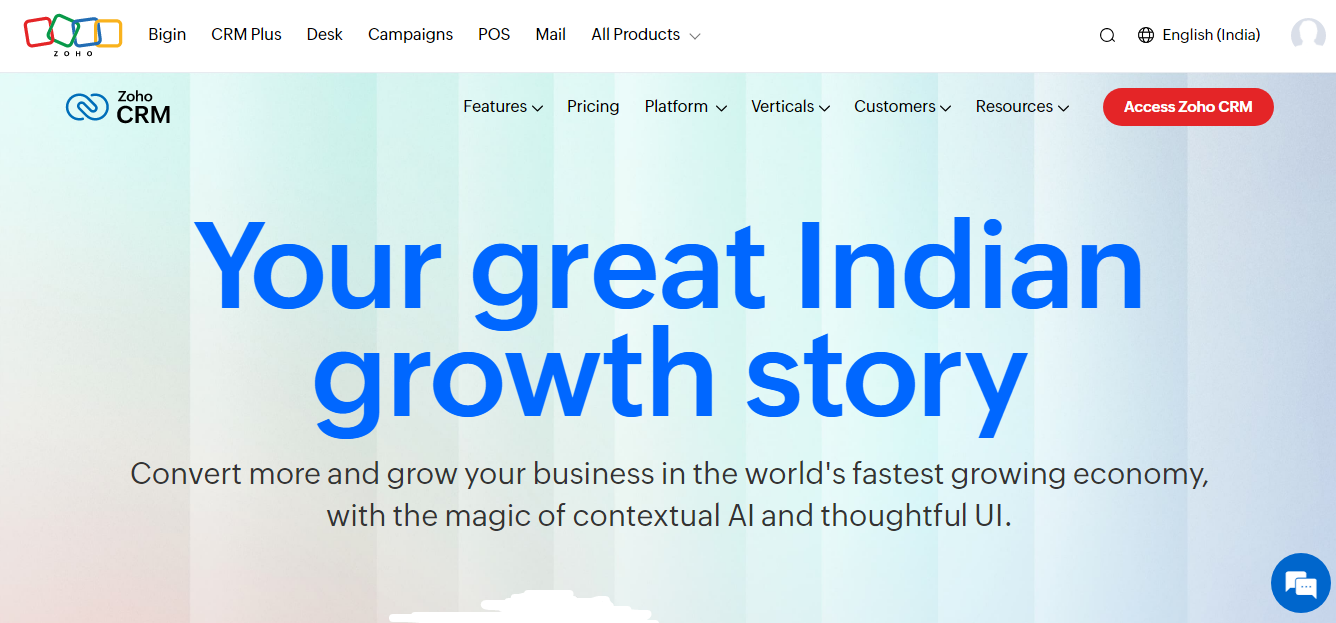
Quick Analysis of Zoho, QuickBooks & FAB Builder CRMBefore comparing features, pricing, and performance, I spent time exploring the official websites, product documentation, feature pages, user communities, and customer reviews of all three platforms. While each solution helps businesses streamline operations, they are built with differentobjectivesin mind. One thing became clear during my research: Zoho, QuickBooks, and FAB CRM should not be viewed as direct competitors in every aspect. They overlap in several business functions, but each platform has its own strengths, target audience, and primary use cases. Let's take a closer look at each platform. Zoho: A Complete Business Software Ecosystem
After analyzing Zoho's product ecosystem, I found that it is much more than just a CRM. Zoho has built an extensive suite of over 55 business applications that work together, allowing companies to manage sales, marketing, finance, HR, customer support, projects, and collaboration from one ecosystem. The platform is designed for businesses that prefer using a single vendor instead of managing multiple disconnected software solutions. Zoho CRM remains the center piece, but businesses can easily expand with applications like Zoho Books, Zoho Desk, Zoho Projects, Zoho Campaigns, Zoho Inventory, and Zoho Analytics as their operations grow. What impressed me
Things to consider
Best suited for
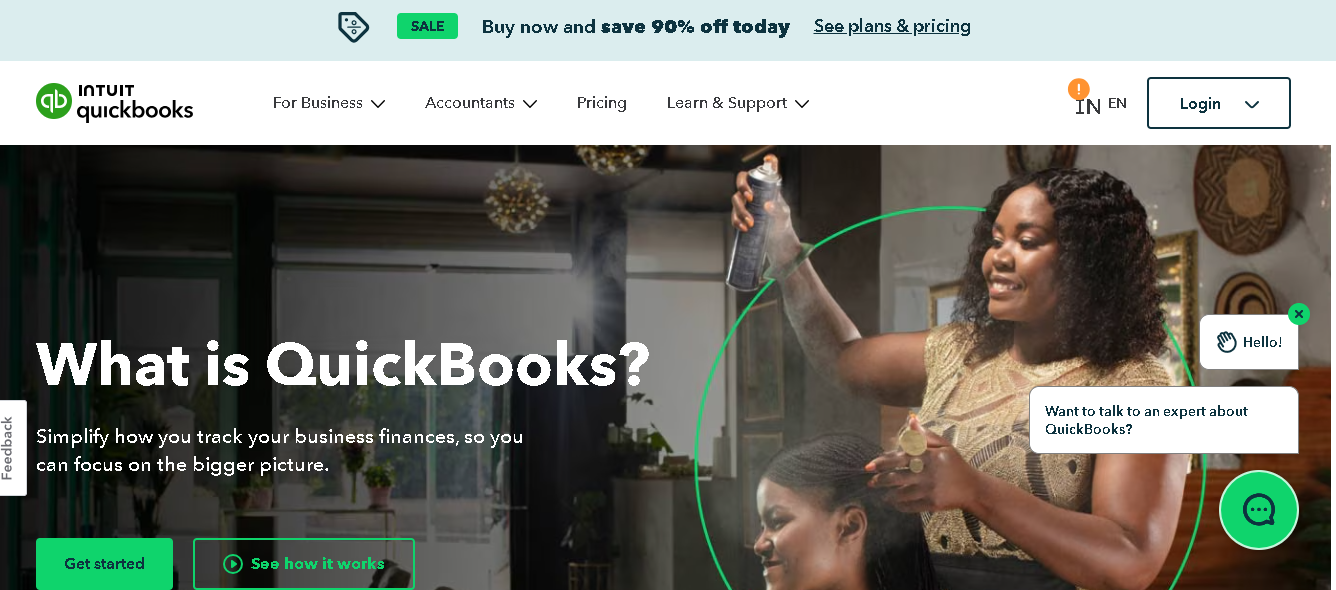
QuickBooks: Built Primarily for Accounting
When I evaluated QuickBooks, it became obvious that its primary focus is financial management rather than customer relationship management. The platform excels at bookkeeping, invoicing, expense tracking, payroll, tax preparation, financial reporting, and bank reconciliation. For businesses whose biggest challenge is managing accounts rather than sales operations, QuickBooks remains one of the strongest options available. Its accounting workflows are mature, easy to understand, and widely accepted by accountants and finance professionals. However, businesses looking for advanced CRM capabilities, lead management, or workflow automation will likely need additional software integrations. What impressed me
Things to consider
Best suited for
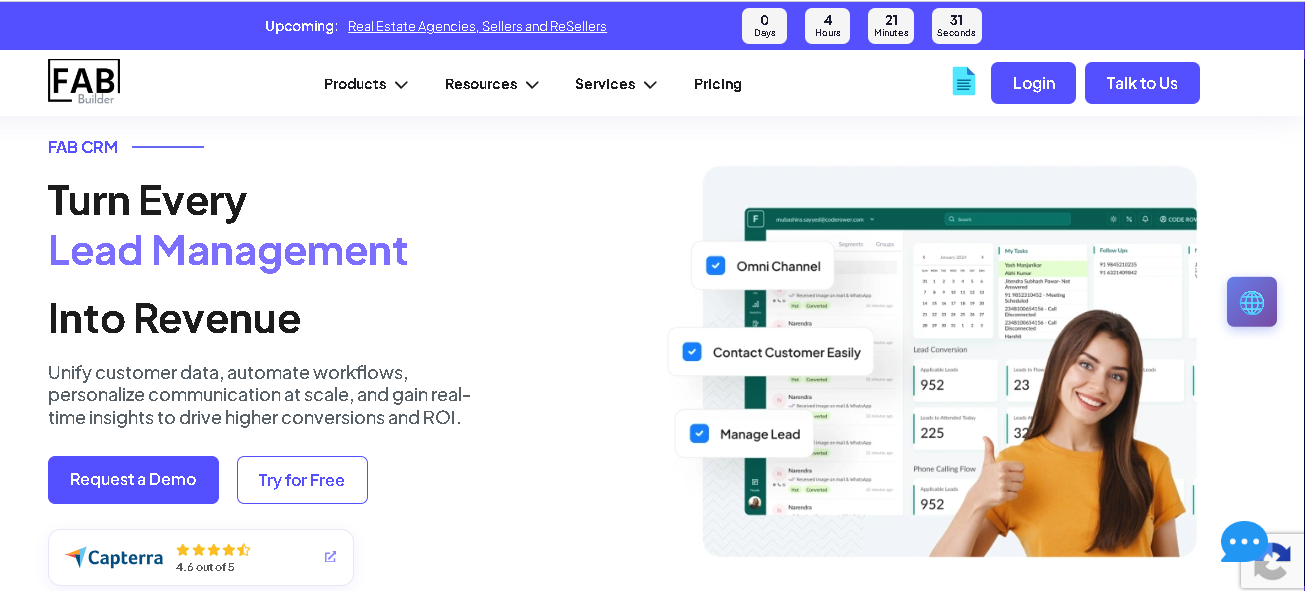
FAB Builder: A Modern CRM & Low-Code Business Automation Platform
After exploring FAB Builder, I noticed that its approach is quite different from both Zoho and QuickBooks. Instead of focusing only on CRM or accounting, the platform combines customer relationship management, workflow automation, low-code application development, and business process automation into a single solution. One feature that stood out during my evaluation is its low-code platform. Businesses can build custom workflows, internal applications, approval systems, customer portals, and operational processes without relying heavily on software developers. FAB Builder also places significant emphasis on WhatsApp CRM, lead management, omnichannel messaging, customer engagement, and process automation, making it particularly attractive for businesses that communicate frequently with customers through messaging channels. What impressed me
Things to consider
Best suited for
My Initial TakeawayAfter reviewing all three platforms, I found that comparing them directly can be misleading because they solve different business problems.
Quick Summary
At this stage of my analysis, there isn't a clear overall winner. Instead, the right choice depends on what your business needs most—whether that's accounting, an integrated business suite, or a flexible automation platform. In the following sections, I'll compare these platforms feature by feature to identify where each one performs best. Zoho vs QuickBooks vs FAB CRM: Feature-by-Feature ComparisonAfter exploring all three platforms, I compared them based on the features businesses rely on most. While there are some overlapping capabilities, each platform has a different core focus. CRM & Lead ManagementQuickBooks isn't built as a CRM. It mainly stores customer details for invoicing and payments. Zoho CRM offers robust lead management, sales pipelines, automation, and customer tracking. FAB CRM also provides comprehensive CRM capabilities but combines them with workflow automation and customizable business processes.
Feature Comparison
Winner: Zoho & FAB Builder
AccountingThis is where QuickBooks shines. It offers excellent bookkeeping, payroll, invoicing, tax management, and financial reporting. Zoho provides accounting through Zoho Books, while FAB CRM focuses more on CRM and business automation than finance.
Accounting Feature Comparison
Workflow AutomationZoho helps automate CRM tasks and internal workflows. FAB CRM goes a step further by allowing businesses to automate approvals, customer onboarding, internal processes, and custom workflows using its low-code platform. QuickBooks offers only basic accounting automation.
Automation Feature Comparison
Customization & Low-CodeIf your business requires custom workflows or applications, FAB CRM stands out with its built-in low-code capabilities. Zoho also supports low-code development through Zoho Creator, while QuickBooks offers limited customization.
Customization Feature Comparison
IntegrationsZoho has the largest integration ecosystem thanks to its extensive suite of business apps. QuickBooks integrates well with financial and ecommerce tools, while FAB CRM supports multiple APIs and business integrations with a growing ecosystem. Winner: Zoho, FAB CRM Reporting & AnalyticsQuickBooks focuses on financial reports, Zoho provides advanced CRM and business analytics, and FAB Builder offers customizable dashboards for operational insights. Winner:Tie (depends on business needs)
My TakeawayBased on my analysis, QuickBooks is the strongest choice for accounting, Zoho offers the most complete business software ecosystem, and FAB CRM is ideal for businesses looking for CRM, workflow automation, and leads management in one platform. The right choice depends on your business priorities rather than the number of features alone. Pros & Cons of Each CRMAfter comparing the features, I looked at where each platform performs well and where it falls short. No software is perfect, so understanding these trade-offs can help you choose the right solution for your business. ZohoPros
Cons
QuickBooksPros
Cons
FAB Builder CRMPros
Cons
My Overall Assessment
Pricing Comparison & Value for MoneyPricing is often one of the biggest deciding factors when choosing CRM software. While all three platforms offer different pricing models, the real value depends on the features you need and how your business plans to scale. Here's a high-level comparison based on publicly available pricing and platform positioning.
A Quick Glance At Pricing
Note: Pricing may vary based on the number of users, selected modules, add-ons, and region. Always check the official pricing page for the latest plans.
My Thoughts on PricingZohoZoho offers flexible pricing across its products, making it a good option for startups and growing businesses. However, if you subscribe to multiple Zoho applications—such as CRM, Books, Desk, Projects, and Campaigns—the total monthly cost can increase over time. Best for:Businesses that want the flexibility to add new tools as they grow. QuickBooksQuickBooks follows a straightforward subscription model with plans designed for freelancers, small businesses, and larger organizations. Since it focuses primarily on accounting, pricing remains easy to understand, though additional business tools may require separate subscriptions. Best for: Businesses looking for reliable accounting software without paying for unnecessary CRM features. FAB CRMFAB Builder follows a customized pricing approach based on business requirements, users, and implementation needs. Rather than offering one-size-fits-all plans, it allows organizations to choose features and workflows that match their operations. For businesses looking for CRM, workflow automation, and low-code development in a single platform, this approach can provide better long-term value than purchasing multiple standalone tools. Best for: Businesses that need a tailored solution instead of fixed feature bundles.
My VerdictI f your primary goal is accounting, QuickBooks offers excellent value. If you're looking for a complete business software ecosystem, Zoho provides one of the most comprehensive options. If your business needs CRM, workflow automation, WhatsApp engagement, and leads management under one platform, FAB CRM offers strong long-term value, especially for organizations with unique business processes. Customer Reviews, Ratings & Community FeedbackFeatures and pricing tell only part of the story. To understand how these platforms perform in real-world business environments, I also reviewed user feedback from software review websites and community discussions. Here's what I found:.
Overall Ratings
What Users Like About ZohoFrom the reviews Ianalyzed, users consistently praised Zoho for:
The most common criticism was that the platform can feel overwhelming fornew usersdue to the number of features and configuration options available. What Users Like About QuickBooksQuickBooks continues to receive positive feedback for its accounting capabilities. Business owners appreciate its:
However, users looking for CRM, lead management, or broader business automation often needadditionalsoftware, since QuickBooks is primarily designed for finance rather than customer relationship management. What I Found About FAB Builder CRMSince FAB Builder is a newer platform, it doesn't yet have the same volume of public reviews as Zoho or QuickBooks. Based on its product capabilities and documentation, the platform is positioned around:
As its customer base grows, more independent reviews and ratings are expected to become available. My TakeawayAfter reviewing customer feedback, one trend became clear:
Customer reviews are valuable, but they should always be considered alongside your business requirements, budget, and long-term goals. A platform that works well for one company may not be the best fit for another. What Reddit Users Are SayingOne of the best ways to evaluate business software is by reading discussions from real users. Unlike vendor websites or sponsored reviews, Reddit often contains honest opinions from business owners, accountants, developers, and CRM administrators who use these tools daily. Here's a summary of the overall community sentiment I found. Zoho: Powerful but Requires Time to LearnMost Reddit users agree that Zoho offers excellent value for businesses looking for an all-in-one software ecosystem. Many appreciate that Zoho One combines CRM, accounting, email, projects, and other business applications under a single subscription. Some users have even switched from QuickBooks to Zoho Books because of pricing and the broader ecosystem. However, a common complaint is that Zoho can feel overwhelming for first-time users. Several discussions mention a learning curve, especially when setting up automations, integrations, or multiple Zoho apps. Support experiences are also mixed. Overall Reddit sentiment:⭐⭐⭐⭐☆ (Positive) QuickBooks: Trusted for Accounting, Less for CRMReddit users consistently recommend QuickBooks for bookkeeping, invoicing, payroll, and tax management. Its reputation as accounting software remains strong, and many accountants continue to rely on it for day-to-day financial operations. That said, business owners often point out that QuickBooks isn't a complete CRM. As companies grow, they frequently integrate it with CRM platforms to handle lead management, sales pipelines, and customer communication. Overall Reddit sentiment:⭐⭐⭐⭐☆ FAB CRM: Limited Community DiscussionsDuring my research, I couldn't find many Reddit discussions specifically about FAB CRM. This is understandable because it's a newer platform compared to established products like Zoho and QuickBooks. Instead of relying on community reviews, I evaluated FAB CRM based on its product features, documentation, and available resources. As its user base grows, it's likely we'll see more independent discussions and reviews across Reddit and other software communities. Overall Reddit sentiment: Not enough public discussions yet. My TakeawayCommunity feedback reinforces what I observed throughout this comparison:
While Reddit is an excellent source for real-world experiences, it's worth remembering that every business has unique requirements. The best platform is the one that aligns with your workflows, team size, and long-term growth plans—not simply the one with the most online discussions. Which Platform Should You Choose?After comparing features, pricing, user reviews, and overall capabilities, it's clear that there isn't a one-size-fits-all solution. The right platform depends on your business goals and the challenges you're trying to solve. Here's my recommendation based on different business scenarios.
If You Need...
My Recommendations by Business TypeFreelancers & ConsultantsIf your primary goal is managing invoices, expenses, and taxes, QuickBooks is the most practical choice. It keeps financial management simple without adding features you may never use. Small BusinessesFor businesses managing customers, sales, and daily operations, Zoho provides a well-rounded ecosystem that can grow with your business. StartupsStartups often need flexibility as their processes evolve. If you want an established ecosystem, Zoho is a strong choice. If your focus is on automating workflows, building custom applications, and managing customer interactions, FAB CRM is worth considering. Growing BusinessesAs teams expand, manual processes become inefficient. FAB Builder CRM stands out for businesses that want to automate approvals, customer onboarding, lead management, and internal workflows without building custom software from scratch. EnterprisesLarge organizations often have unique processes and integration requirements. Both Zoho and FAB CRM can support enterprise use cases, with the choice depending on whether your priority is a broad software ecosystem or a highly customizable automation platform. My Final RecommendationBased on my analysis, each platform excels in a different area:
Rather than asking which platform is the "best," ask which one solves your biggest business challenge. That answer will usually lead you to the right choice.
FAQ Frequently Asked Questions |