Imagine losing a potential client simply because a lead got buried in a WhatsApp chat or a spreadsheet was never updated. For travel agencies, this is not just a missed opportunity — it’s lost revenue. The travel industry is moving faster than ever. Travelers demand personalized experiences, instant responses, and seamless booking processes, yet many agencies still rely on manual systems to manage leads, bookings, and client communication. This outdated approach leads to missed leads, double bookings, delayed confirmations, and frustrated clients, directly affecting your agency’s growth and reputation. A CRM for travel solves these challenges by centralizing client data, automating workflows, and providing actionable insights. With platforms like FAB CRM, agencies can manage leads, automate follow-ups, track itineraries, oversee vendors, and measure performance — all from a single, intuitive platform.
Whether you run a travel agency, a growing tour company, or manage a team of travel agents, adopting a dedicated travel CRM is no longer optional — it’s essential to stay competitive and scale your business in 2026.
Why Most Travel Agencies Fail After Buying a CRM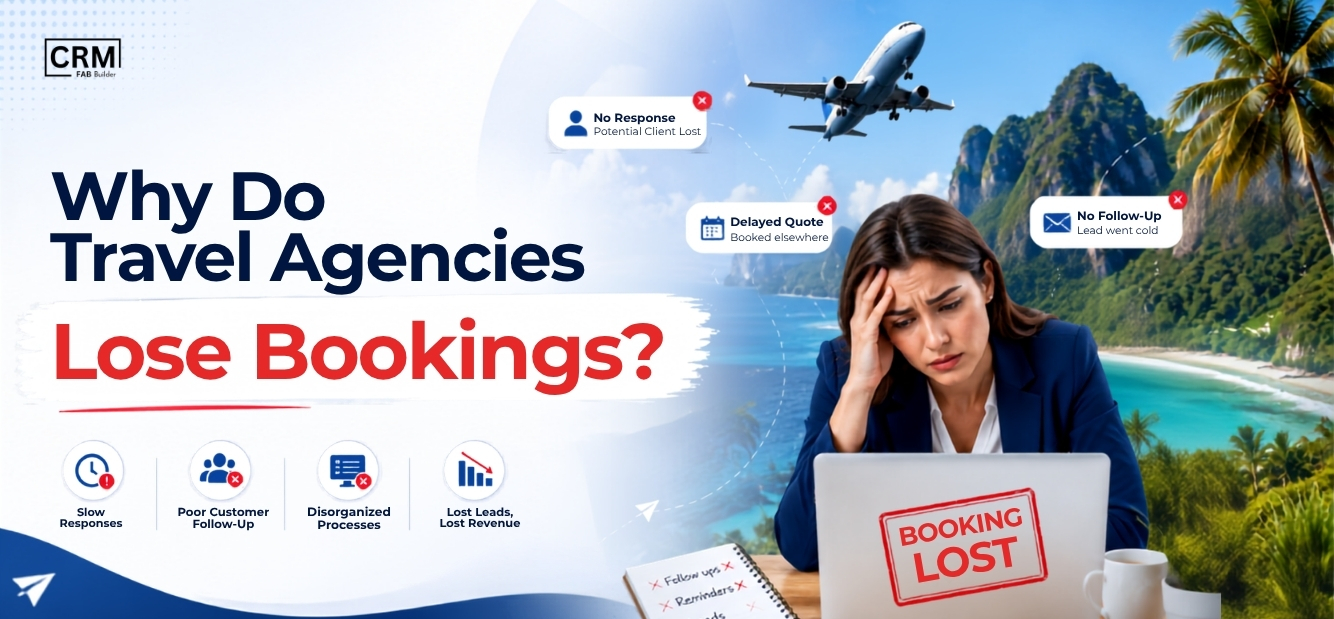 Many travel agencies invest in CRM software expecting instant improvements in sales and customer management. However, the problem is often not the CRM itself—it's choosing a solution that doesn't match the way a travel business operates. Generic CRMs may work for sales teams, but they often lack features like travel inquiry tracking, WhatsApp follow-ups, quotation management, and automated lead assignment. Another common mistake is buying a CRM with too many unnecessary features. A small travel agency doesn't need enterprise-level complexity, while a large tour operator may quickly outgrow a basic CRM. Selecting the right CRM depends on your business size, monthly lead volume, and daily workflow. Here are some of the most common reasons travel agencies struggle after implementing a CRM:
The good news is that these challenges are avoidable. In the following sections, we'll compare the best travel CRM software for startups, small agencies, growing businesses, and large travel enterprises so you can choose a solution that fits your business—not the other way around.
Questions Every Travel Industry Should Ask Before Purchasing
Very few competitors include this buyer checklist.
Best CRM for Startups & Solo Travel Agents
Startups need a CRM that's affordable, easy to use, and supports lead management and WhatsApp follow-ups without requiring a dedicated IT team.
Comparison Table
Key Features, Pros & Cons
Best CRM for Small to Mid Size Travel IndustriesAs your travel business grows, managing higher lead volumes, multiple sales teams, and customer follow-ups becomes more challenging. A scalable travel CRM with automation, integrations, and advanced reporting helps streamline operations, improve team productivity, and support long-term business growth.
Quick Comparison Table
Key Features, Pros & Cons
CRM for Mid to Large Size Travel IndustriesMid to large travel businesses require a CRM that can handle higher lead volumes, multiple sales teams, and complex workflows without compromising efficiency. The following CRM solutions offer advanced automation, enterprise-grade integrations, and scalable features to support growing travel agencies, tour operators, and corporate travel companies. CRM Comparison Table
Key Features, Pros & Cons
CRM Recommendations by Travel Business Type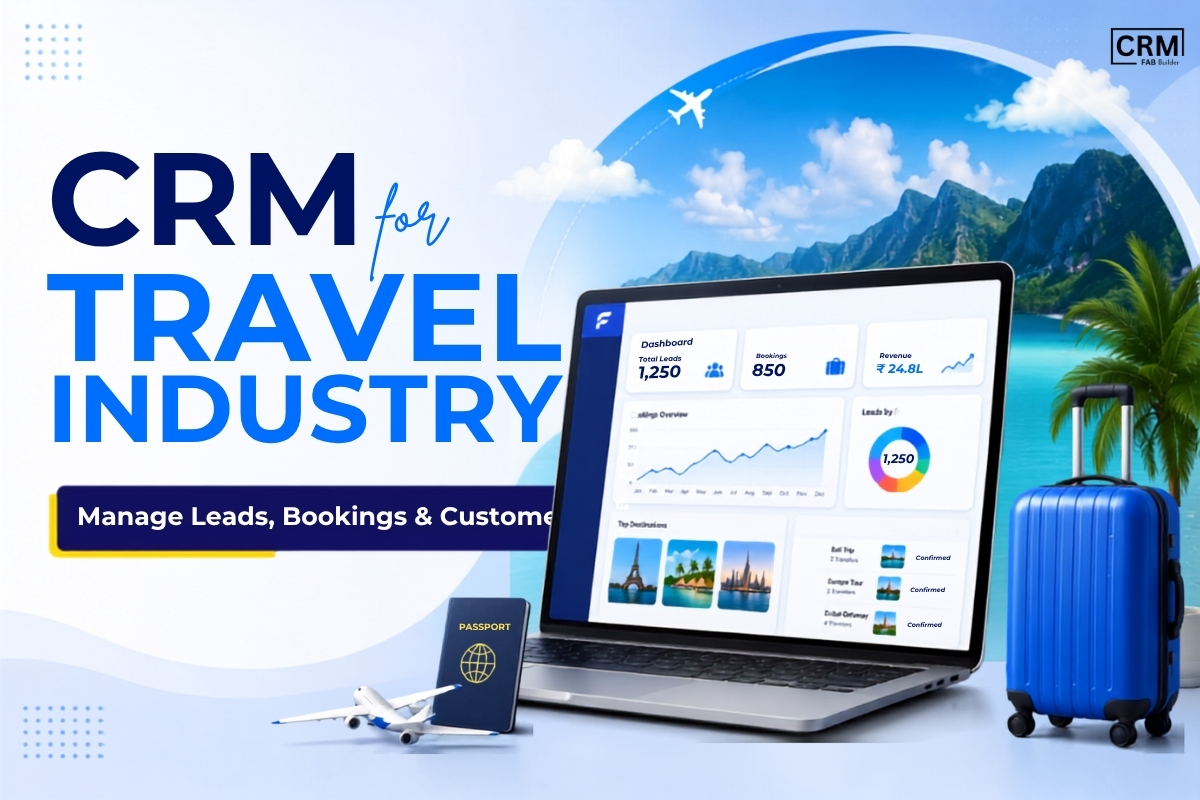
Instead of only company size, add another section for business model.
Best CRM for Tour Operators
Needs:
Recommended:
Best CRM for Travel Agencies
Needs:
Recommended:
Best CRM for Visa Consultants
Needs:
Recommended:
Best CRM for Destination Management Companies (DMCs)
Needs:
Recommended:
Best CRM for Corporate Travel Management
Needs:
Recommended:
Best CRM for Luxury Travel Companies
Needs:
Recommended:
CRM Selection Matrix
ConclusionIn today’s fast-paced travel industry, managing leads, bookings, vendors, and client relationships manually is no longer efficient or sustainable. Implementing a CRM for travel agencies or a travel CRM software is no longer optional — it’s essential for agencies that want to stay competitive, provide personalized experiences, and grow their business. From centralized lead management and automated booking workflows to multi-channel communication and data-driven insights, a travel CRM helps agencies streamline operations, reduce errors, and maximize revenue. Among the top solutions in 2026, FAB CRM stands out as a dedicated travel-focused platform, offering booking & itinerary management, vendor tracking, automation, analytics dashboards, and client engagement tools. Whether you are a small travel agency or a large travel company, FAB CRM can scale with your needs while ensuring your team works smarter, not harder. Choosing the right CRM is critical. Consider your agency size, workflows, pain points, and growth plans, and select a CRM that provides the features, integrations, and scalability your business requires. A well-chosen travel agency CRM system empowers your team to focus on what truly matters: creating unforgettable travel experiences for your clients. Start exploring FAB CRM today and take your travel business to the next level — from managing leads efficiently to delighting every client with personalized travel experiences. |
Frequently Asked Questions
What is a Healthcare CRM?
A Healthcare CRM is software designed to help hospitals, clinics, and medical practices manage patient relationships, streamline communication, automate follow-ups, and improve overall patient experience.
How does a Healthcare CRM differ from a regular CRM?
A Healthcare CRM is specifically tailored for medical workflows — including patient lifecycle management, appointment reminders, HIPAA compliance, EHR integrations, and care coordination — whereas general CRMs focus mainly on sales and customer interactions.
Is a Healthcare CRM the same as an EHR?
No.
- EHR (Electronic Health Records) stores clinical information like diagnoses, prescriptions, treatment history, and lab results.
- Healthcare CRM manages patient communication, engagement, scheduling, follow-ups, and support.
- Both complement each other but serve different purposes.
Can a Healthcare CRM integrate with my existing EHR system?
Many modern Healthcare CRMs offer integration with popular EHR/EMR platforms, allowing seamless data sharing and reducing manual entry. Always check integration compatibility before selecting a CRM.
What are the biggest benefits of adopting a Healthcare CRM?
A Healthcare CRM improves:
- Patient engagement
- Scheduling & follow-ups
- Staff workload management
- Care coordination
- Communication accuracy
- Patient satisfaction & retention
Does FAB CRM work for healthcare organizations?
Yes. FAB CRM supports clinics, hospitals, diagnostics labs, and telehealth providers with features like automated patient journeys, HIPAA-style security controls, appointment workflows, multi-channel communication, and customizable dashboards.