Customer Relationship Management CRM Software Benefits Ishaan Puniani 19 Aug 2026 | 5 min read Did you know that businesses that actively use CRM systems can increase sales by up to 29% and improve customer retention by over 30%? In today’s fast-paced, customer-driven market, these numbers aren’t just statistics, they’re a competitive edge. Customer relationships are the lifeblood of any organization. Yet, many businesses struggle with scattered data, missed leads, and inconsistent customer experiences. This is where CRM benefits become essential. CRM, or Customer Relationship Management, isn’t just a tool; it’s a strategy that empowers businesses to centralize customer information, automate repetitive tasks, and deliver personalized experiences at scale. For decision-makers like founders, CTOs, project managers, and team leaders, understanding the benefits of CRM software is crucial. Platforms like FAB CRM make it easy to turn raw customer data into actionable insights. With features such as automated workflows, detailed analytics, and personalized engagement, FAB CRM helps businesses boost sales, enhance customer satisfaction, and streamline operations. In this guide, we’ll dive into the top CRM benefits, explore common challenges businesses face, and provide practical tips for selecting the right CRM solution, so you can start leveraging CRM to drive growth, efficiency, and lasting customer relationships. What is a Customer Relationship Management Software? |
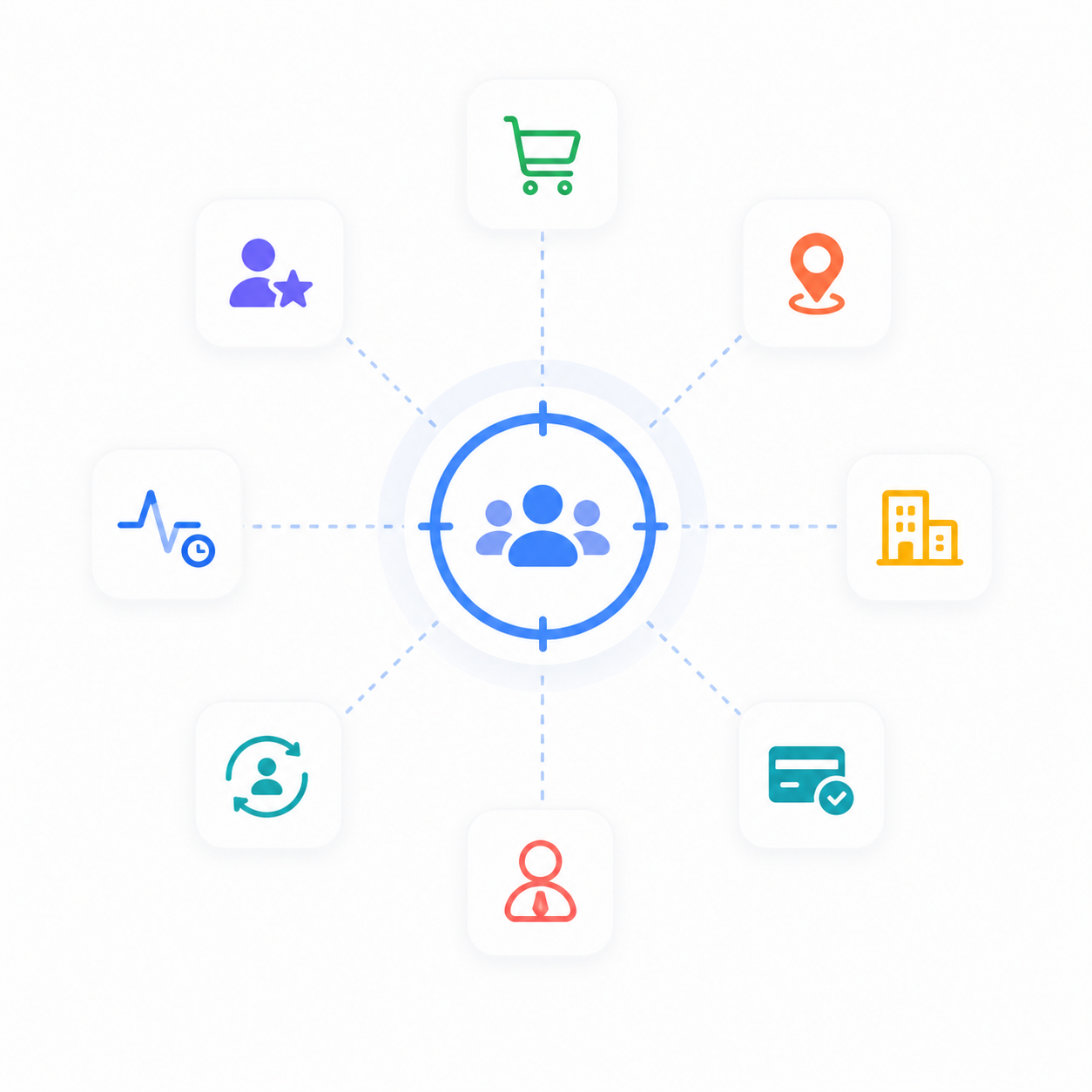
| Benefits | Description |
| Improved Customer Service | CRM systems help businesses manage customer interactions, leading to better service and satisfaction. |
| Increased Sales | By streamlining sales processes and tracking customer data, CRM can boost sales performance. |
| Enhanced Data Analysis | CRM systems provide valuable insights through data analysis, helping businesses make informed decisions. |
| Better Customer Retention | By understanding customer needs and behaviors, businesses can improve retention rates. |
| Increased Efficiency | Automation of repetitive tasks allows teams to focus on more strategic activities. |
Customer Relationship Management (CRM) Benefits in Details:
1. Enhance Customer Service and Retention:
One of the most immediate and noticeable CRM benefits is the improvement in customer service. By consolidating all customer information in a single platform, businesses gain a complete view of every interaction; past purchases, support tickets, preferences, and communication history.
This 360-degree view allows teams to respond to inquiries faster, resolve issues efficiently, and anticipate customer needs. Improved service leads directly to higher satisfaction, stronger loyalty, and increased customer retention.
2. Boost Sales Performance and Revenue
CRM systems provide sales teams with the tools they need to track leads, opportunities, and deal progress throughout the sales pipeline. With centralized information and automated reminders, sales representatives can prioritize high-value prospects, reduce follow-up delays, and close deals faster.
The transparency CRM provides into the sales process also allows managers to forecast revenue more accurately, identify bottlenecks, and optimize team performance.
3. Gain Actionable Insights with Analytics
Modern CRM solutions offer powerful reporting and analytics features. From monitoring sales performance and marketing campaigns to understanding customer behavior, these insights are invaluable for strategic decision-making.
Businesses can identify trends, measure ROI, and adjust their strategies based on real-time data rather than relying on assumptions. These actionable insights empower leaders to make informed choices, optimize processes, and ultimately achieve better outcomes, demonstrating the advantages of customer relationship management in driving smarter business decisions.
4. Increase Team Productivity
By reducing manual work, employees can focus on higher-value activities, such as building relationships, generating leads, and closing deals. Cross-departmental collaboration also improves, as everyone has access to the same customer data, which minimizes duplication of effort and ensures a consistent approach across sales, marketing, and customer support teams.
5. Generate and Nurture New Leads
Capturing and converting new leads is one of the primary goals of any business. CRM software makes this process more structured and efficient. By tracking every interaction a prospect has with your business from website visits to email engagement teams can identify promising leads earlier and nurture them through personalized communication.
CRM systems enable lead scoring, segmentation, and automated follow-ups, ensuring that potential customers are engaged consistently. This systematic approach helps turn prospects into loyal customers, showcasing the benefit that customer relationship management brings to sales and marketing alignment.
6. Improve Marketing Effectiveness
Marketing campaigns are more effective when informed by detailed customer data. CRM solutions provide insights into customer preferences, buying behavior, and engagement patterns, allowing marketing teams to deliver targeted and personalized campaigns.
Businesses can track the success of campaigns, adjust messaging in real-time, and allocate resources efficiently. The result is higher conversion rates, better customer engagement, and improved return on marketing investments. These capabilities illustrate the advantages customer relationship management brings beyond sales, extending into marketing strategy and execution.
7. Maximize Profitability and Business Growth
When all the benefits above are combined enhanced customer service, increased sales, actionable insights, higher productivity, and effective marketing the outcome is clear: improved profitability.
CRM systems help businesses identify their most valuable customers, streamline operations, reduce churn, and make strategic decisions that directly impact the bottom line.
8. Support Scalability and Future Growth
Beyond immediate benefits, CRM solutions provide a foundation for future business growth. As organizations expand, CRM systems scale with them, handling more customers, more data, and more complex processes without losing efficiency.
This scalability allows businesses to adapt to new markets, integrate additional tools and platforms, and maintain a consistent level of service even as operations become more complex. In this way, CRM is not just a solution for today it’s an enabler for tomorrow.
Common CRM Challenges Businesses Face
1. Resistance to Change from Employees
One of the biggest obstacles to CRM adoption is employee resistance. Teams accustomed to spreadsheets, email chains, or legacy systems may be reluctant to switch to a centralized platform. Without proper buy-in and training, even the most powerful CRM system can fail to deliver its full potential.
2. Complex Implementation and Integration
CRM systems often need to integrate with existing tools such as email platforms, marketing automation software, e-commerce systems, and ERP solutions. Poor planning or lack of technical expertise can make implementation complex and time-consuming. Businesses may face delays or disruptions in operations if integrations are not handled properly.
3. Data Quality and Management Issues
A CRM is only as good as the data it contains. Inconsistent, incomplete, or outdated customer information can undermine the effectiveness of a CRM system. Poor data quality leads to inaccurate reports, ineffective marketing campaigns, and lost opportunities. Ensuring proper data entry, validation, and maintenance is a continual challenge for businesses.
4. High Costs and Resource Requirements
While CRMs provide long-term ROI, the initial investment in software, setup, training, and ongoing maintenance can be significant. Small and medium-sized businesses may find these costs a barrier, especially when balancing other operational priorities.
5. Low User Adoption
Even after successful implementation, some teams may underutilize the CRM. Employees may revert to old habits if they perceive the system as cumbersome or unnecessary. Low adoption diminishes ROI and prevents the business from fully leveraging the benefits of CRM software.
6. Security and Compliance Concerns
Storing sensitive customer data in a centralized platform requires robust security measures. Businesses must ensure the CRM system complies with data privacy regulations such as GDPR, HIPAA, or industry-specific standards. Failure to address security concerns can result in breaches, legal issues, and loss of customer trust.
7. Overwhelming Features and Complexity
Modern CRMs offer a wide range of features, which can be overwhelming for new users. If a system is too complex or not tailored to the business’s needs, teams may struggle to use it effectively, leading to frustration and underutilization.
Here are actionable tips to overcome common CRM challenges:
1. Secure Employee Buy-In and Encourage Adoption
Employee resistance is one of the biggest obstacles to CRM success. To overcome this:
- Communicate the benefits clearly to all teams.
- Involve key stakeholders in the decision-making process.
- Highlight how CRM reduces repetitive tasks and improves productivity.
When employees understand how the system helps them personally, adoption increases significantly. Consider creating champions within teams to advocate for CRM use and provide peer support.
2. Plan and Execute a Smooth Implementation
CRM implementation can be complex, especially when integrating with other systems. To ensure a smooth rollout:
- Develop a clear implementation roadmap.
- Start with critical processes and expand gradually.
- Work with CRM vendors or consultants for technical guidance.
- Breaking down implementation into phases reduces risk, minimizes disruption, and allows teams to adapt at a manageable pace.
3. Maintain High-Quality Data
Data quality is critical for realizing CRM benefits. Poor data can lead to inaccurate reports and ineffective decision-making. To maintain clean data:
- Standardize data entry protocols.
- Regularly audit and cleanse the database.
- Encourage teams to update records consistently.
- High-quality data ensures analytics, automation, and personalized engagement work effectively, enhancing the overall ROI of your CRM investment.
4. Provide Comprehensive Training
Lack of training can lead to underutilization or misuse of CRM features. To overcome this:
- Offer role-specific training for sales, marketing, and support teams.
- Use hands-on workshops, video tutorials, and guides.
- Schedule refresher sessions as the CRM system evolves.
- Well-trained employees are more confident, efficient, and likely to embrace the platform fully.
5. Choose the Right CRM for Your Business Needs
Not every CRM is suitable for every business. Avoid complexity and unnecessary costs by:
- Evaluating features against your business objectives.
- Considering scalability for future growth.
- Testing usability through trials or demos before full deployment.
- Selecting the right CRM ensures that teams can use it effectively without frustration, increasing adoption and productivity.
6. Implement Security and Compliance Best Practices
Customer data is valuable and must be protected. To mitigate security risks:
- Implement role-based access controls.
- Encrypt sensitive data and maintain regular backups.
- Ensure the system complies with relevant regulations such as GDPR or industry-specific standards.
- This protects your business from breaches and builds trust with customers.
7. Focus on User-Friendly Features
Modern CRMs offer many features, but overwhelming users can hinder adoption. To address this:
- Prioritize essential tools and gradually introduce advanced functionalities.
- Customize dashboards and workflows to match team needs.
- Collect feedback regularly and adjust configurations for usability.
- A system that is intuitive and tailored to workflows improves engagement and ensures teams fully leverage CRM benefits.
Real-World Examples with Customer Relationship Management Benefits
1. Boosting Sales Through Lead Management
A mid-sized software company implemented a CRM system to track leads, manage follow-ups, and monitor sales pipelines. Within six months:
- Lead response times decreased by 40%
- Sales conversion rates increased by 25%
- Teams could prioritize high-potential opportunities efficiently
This example illustrates the CRM benefit of enhanced sales productivity and better pipeline visibility, which leads to measurable revenue growth.
2. Improving Customer Retention
A retail chain integrated a CRM to consolidate customer purchase history, preferences, and support interactions. By personalizing communication and offering targeted promotions:
- Customer retention improved by 30%
- Repeat purchases increased significantly
- Customer satisfaction scores rose consistently
This shows the advantage of customer relationship management in building loyalty and long-term relationships.
3. Optimizing Marketing Campaigns
A B2B marketing firm used a CRM to segment audiences and track engagement with campaigns. As a result:
- Email open rates increased by 20%
- Marketing ROI improved due to better targeting
- Campaign performance became easier to analyze and optimize
CRM systems provide the benefits of customer relationship management systems by enabling data-driven marketing decisions and personalized outreach.
4. Streamlining Customer Support
A SaaS company implemented a CRM to centralize customer support tickets and interactions. The impact included:
- Faster response times to customer queries
- Reduced ticket backlog by 35%
- Improved collaboration among support teams
Here, the benefit the customer relationship management system delivers is clear: improved service efficiency and higher customer satisfaction.
5. Supporting Data-Driven Decisions
A logistics company leveraged CRM analytics to monitor customer interactions and sales trends. By analyzing patterns and metrics:
- Management made informed decisions on resource allocation
- Customer engagement strategies were refined
- Overall business performance improved through actionable insights
This demonstrates the advantages customer relationship management brings to strategic planning and operational efficiency.
6. Enabling Scalability
A growing e-commerce startup adopted a CRM to manage expanding customer data and automate workflows. As their business scaled:
- Processes remained efficient despite increased volume
- Teams could handle more customers without adding headcount
- The CRM became a central hub for sales, marketing, and support
This highlights the long-term CRM benefit of scalability, helping businesses grow without compromising performance.
How to Choose the Right CRM for Your Business
1. Identify Your Business Needs and Objectives
Before evaluating CRM platforms, clearly define your business goals. Ask yourself:
- Are you looking to improve sales pipeline management?
- Do you need better customer support tracking?
- Is marketing automation a priority?
- Are you aiming for data-driven insights for strategic decisions?
Understanding your objectives ensures that you select a CRM system that addresses your specific requirements rather than opting for a solution with unnecessary features.
2. Consider Scalability and Future Growth
Your CRM should not only meet current needs but also support your business as it grows. Consider:
- Can the system handle increasing customer data and user accounts?
- Does it integrate easily with other tools as your tech stack expands?
- Will it support more advanced features in the future, such as AI-driven insights or automation?
Choosing a scalable CRM ensures long-term ROI and prevents costly migrations later.
3. Evaluate Usability and User Experience
Even the most feature-rich CRM is ineffective if your team struggles to use it. Focus on:
- Intuitive interface and easy navigation
- Role-specific dashboards and workflows
- Customization options to match your team’s processes
A user-friendly system increases adoption rates, reduces training time, and maximizes productivity, delivering the advantages that customer relationship management is designed to provide.
4. Integration with Existing Tools
CRM systems must seamlessly integrate with your existing software ecosystem, including:
- Email marketing platforms
- Accounting and ERP systems
- E-commerce and customer support tools
- Collaboration platforms
Proper integration ensures data flows smoothly across departments, enabling comprehensive insights and avoiding silos.
5. Security and Compliance Features
Since CRMs store sensitive customer data, security is paramount. Look for:
- Role-based access controls
- Data encryption and backup options
- Compliance with regulations such as GDPR, HIPAA, or industry-specific standards
A secure CRM protects your business, builds customer trust, and mitigates risk.
6. Review Analytics and Reporting Capabilities
Data-driven decision-making is a top CRM benefit. Ensure your CRM offers:
- Customizable dashboards
- Detailed reports on sales, marketing, and customer engagement
- Predictive analytics and trend insights
Strong analytics capabilities help your business track performance, optimize processes, and make strategic decisions based on reliable data.
7. Consider Vendor Support and Training
Finally, evaluate the level of support provided by the CRM vendor:
- Availability of training resources and documentation
- Customer support responsiveness
- Community and knowledge-base resources
A supportive vendor ensures your teams can overcome challenges quickly and fully leverage the system.
When it comes to choosing the right CRM platform for your business, not all solutions are created equal.
Conclusion:
Ready to experience the full benefits of CRM for your business?
Take the next step with FAB CRM, a powerful platform designed to centralize customer data, streamline workflows, and provide actionable insights that drive growth.
Did you know that businesses that actively use CRM systems can increase sales by up to 29% and improve customer retention by over 30%? In today’s fast-paced, customer-driven market, these numbers aren’t just statistics—they’re a competitive edge.
Customer relationships are the lifeblood of any organization. Yet, many businesses struggle with scattered data, missed leads, and inconsistent customer experiences. This is where CRM benefits become essential. CRM, or Customer Relationship Management, isn’t just a tool—it’s a strategy that empowers businesses to centralize customer information, automate repetitive tasks, and deliver personalized experiences at scale.
For decision-makers like founders, CTOs, project managers, and team leaders, understanding the benefits of CRM software is crucial. Platforms like FAB CRM make it easy to turn raw customer data into actionable insights. With features such as automated workflows, detailed analytics, and personalized engagement, FAB CRM helps businesses boost sales, enhance customer satisfaction, and streamline operations.
In this guide, we’ll dive into the top CRM benefits, explore common challenges businesses face, and provide practical tips for selecting the right CRM solution—so you can start leveraging CRM to drive growth, efficiency, and lasting customer relationships.
What is a Customer Relationship Management Software?
Sample product
A CRM, or Customer Relationship Management system, is a centralized platform that helps businesses manage interactions with prospects, customers, and partners. At its core, CRM is about building stronger relationships, improving efficiency, and enabling data-driven decisions.
FAQs
Find answers to common questions below.
Still have questions?
Can’t find the answer you’re looking for? Please reach out.