Leads are coming in, customers are growing, and teams are expanding — yet sales data lives in one tool, support conversations in another, and customer insights somewhere else entirely. Sound familiar? This is exactly why modern businesses rely on CRM (Customer Relationship Management) software. But here’s the challenge: not all CRM systems are built the same. With multiple types of CRM software available, choosing the wrong one can result in poor adoption, missed opportunities, and wasted investment. Business leaders often find themselves asking:
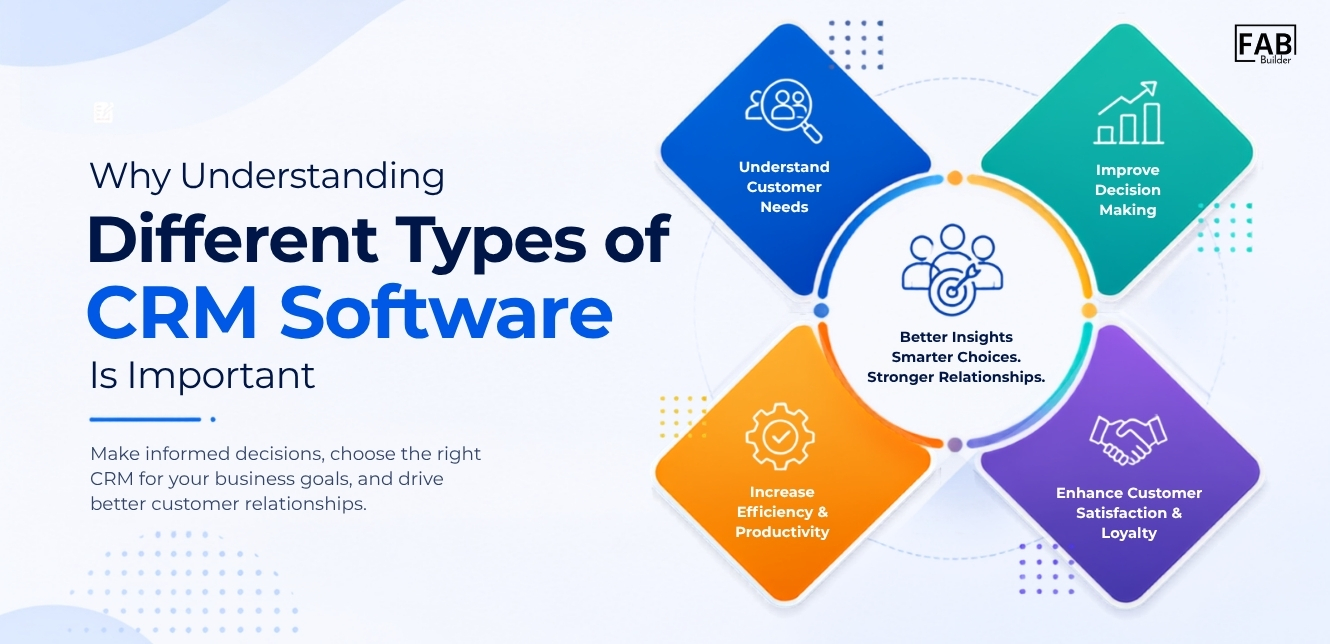
Understanding the different types of CRM is no longer optional — it’s a strategic necessity. The right CRM can streamline operations, unlock customer insights, improve collaboration, and support long-term growth. The wrong one can slow teams down and create data silos.
In this guide, we’ll break down what CRM is, explore the main types of CRM software, explain their features and use cases, and help you choose the right CRM type for your business. We’ll also show how FAB CRM brings together operational, analytical, and strategic CRM capabilities in one flexible platform — making it easier for businesses to scale with confidence. What is CRM?CRM stands for Customer Relationship Management. At its core, a CRM is a system that helps businesses manage, track, and improve interactions with customers and prospects throughout the entire customer lifecycle — from the first inquiry to long-term retention.
So, what are CRMs really used for? A CRM acts as a central hub where customer data, communication history, sales activities, and support interactions are stored in one place. Instead of juggling spreadsheets, emails, and disconnected tools, teams get a single source of truth for all customer-related information. Modern CRM software goes beyond contact management. It helps businesses:
CRM Types Overview
CRM Software Types ExplainedNot all businesses manage customers the same way — and that’s exactly why CRM software comes in different types. Depending on your business model, customer journey, and internal processes, you may need a CRM focused on automation, analytics, collaboration, or long-term strategy. So, when people search for types of CRM software, types of CRM programs, or different types of CRMs, they are usually trying to understand how CRM systems are categorized and which one aligns best with their business goals. Broadly, CRM systems are classified into three primary types, with some platforms offering hybrid or advanced versions: 1. Operational CRM Software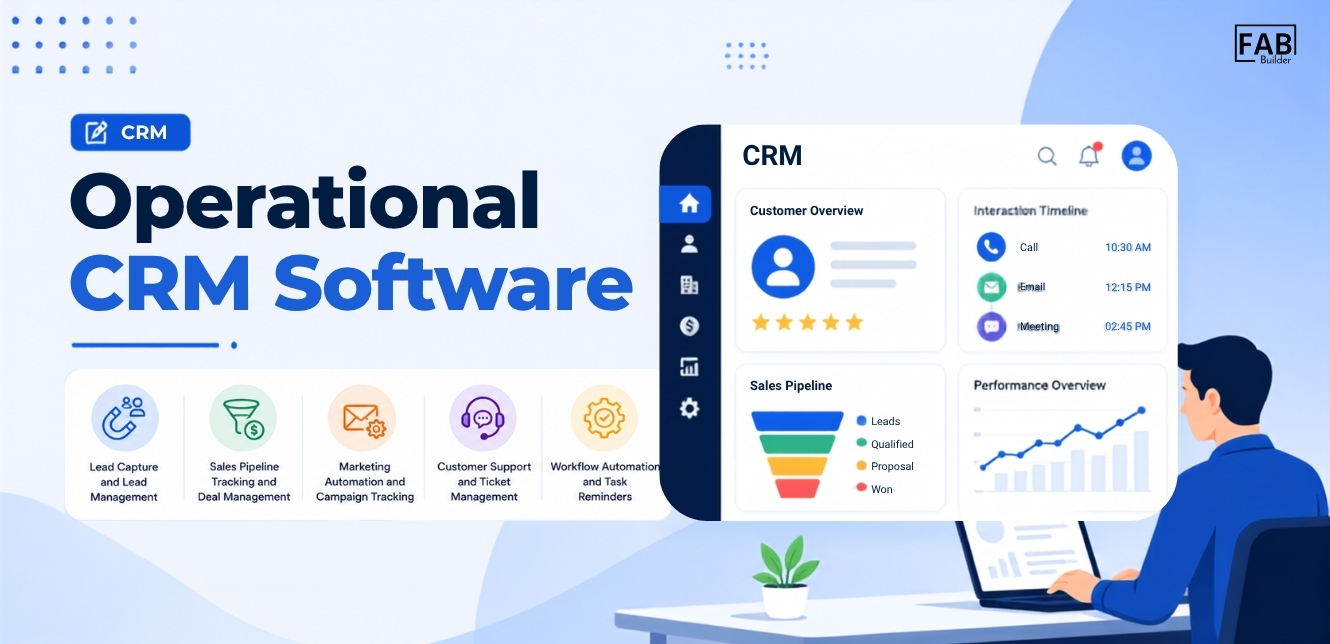 Operational CRM software is designed to support and automate daily customer-facing operations. This includes sales activities, marketing campaigns, and customer service processes. The main objective of an operational CRM is efficiency. It helps teams reduce manual work, avoid missed follow-ups, and ensure consistent engagement with prospects and customers. Key functions of operational CRM software include:
This type of CRM program is ideal for businesses that handle a high volume of leads, inquiries, or customer interactions and need structured processes to manage them effectively. 2. Analytical CRM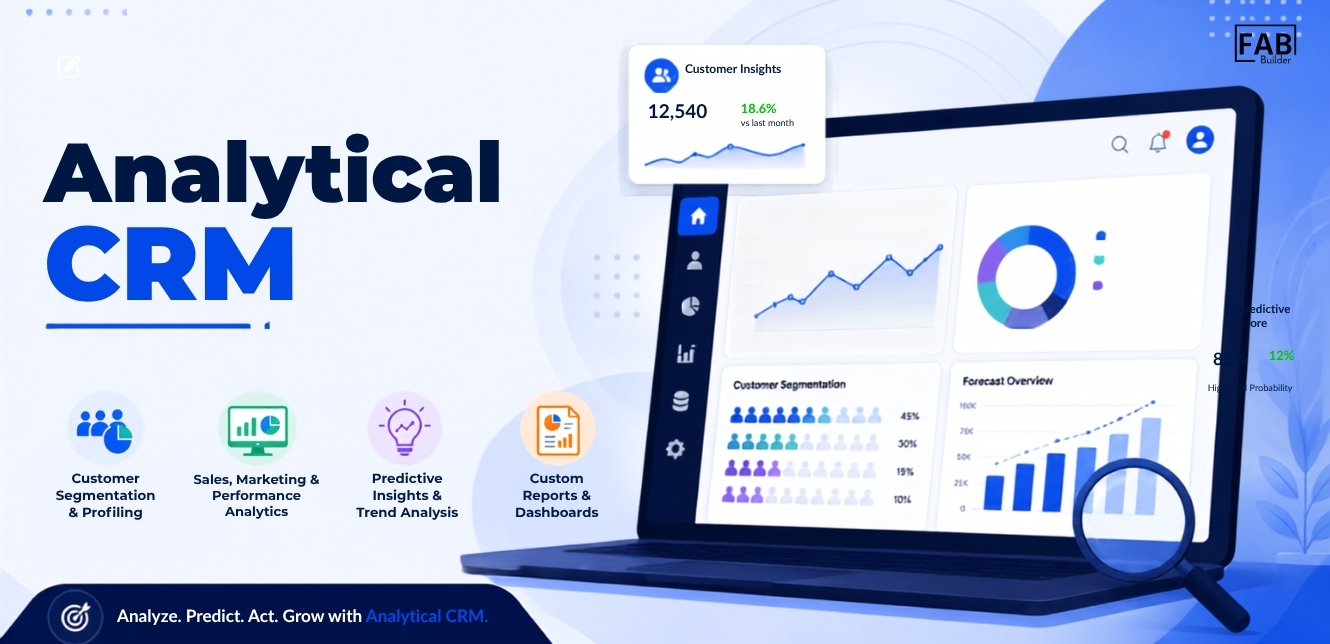 Analytical CRM focuses on collecting, organizing, and analyzing customer data to generate meaningful insights. Unlike operational CRM, which emphasizes action, analytical CRM emphasizes understanding and decision-making. It helps businesses answer important questions such as:
Analytical CRM capabilities typically include:
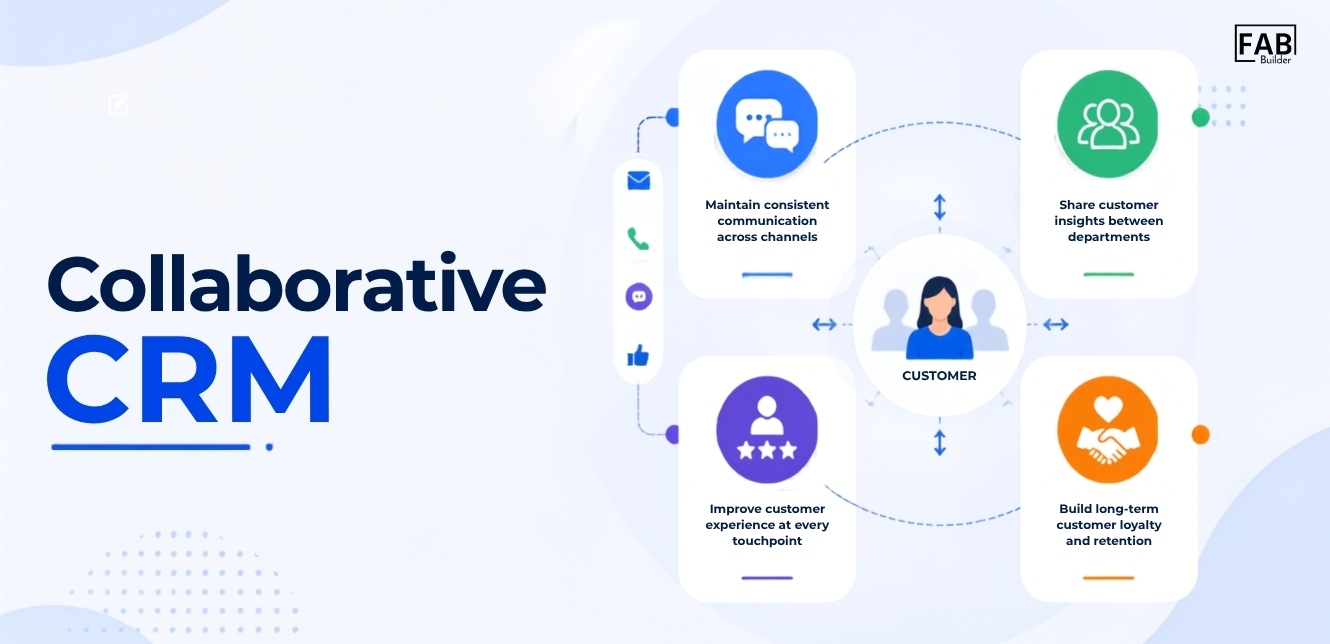
For founders, CTOs, and decision-makers, analytical CRM is critical for shaping strategy and improving ROI through data-backed decisions. 3. Collaborative CRM (Strategic CRM) |
| Business Need | Recommended CRM Type | Why It Fits |
|---|---|---|
| Automating sales and follow-ups | Operational CRM | Helps manage leads, automate workflows, and streamline sales processes |
| Understanding customer behavior and trends | Analytical CRM | Provides reporting, customer insights, and performance analytics |
| Improving communication across teams | Collaborative CRM | Centralizes customer data and enables seamless team collaboration |
| Building long-term customer relationships | Strategic CRM | Focuses on customer retention, loyalty, and personalized experiences |
| Managing industry-specific workflows | Industry-Specific CRM | Offers specialized features and integrations tailored to business needs |
| Handling high lead volumes | Operational CRM | Automates lead assignment, nurturing, and conversion processes |
| Making data-driven business decisions | Analytical CRM | Helps identify trends, forecast sales, and optimize marketing efforts |
| Supporting multiple departments or locations | Collaborative CRM | Ensures all teams have access to the same customer information |
| Improving customer retention and engagement | Strategic CRM | Enables personalized communication and customer lifecycle management |
| Managing real estate, healthcare, or finance operations | Industry-Specific CRM | Provides workflows designed for specific industries |
What Are the Differences Between B2B CRM and B2C CRM
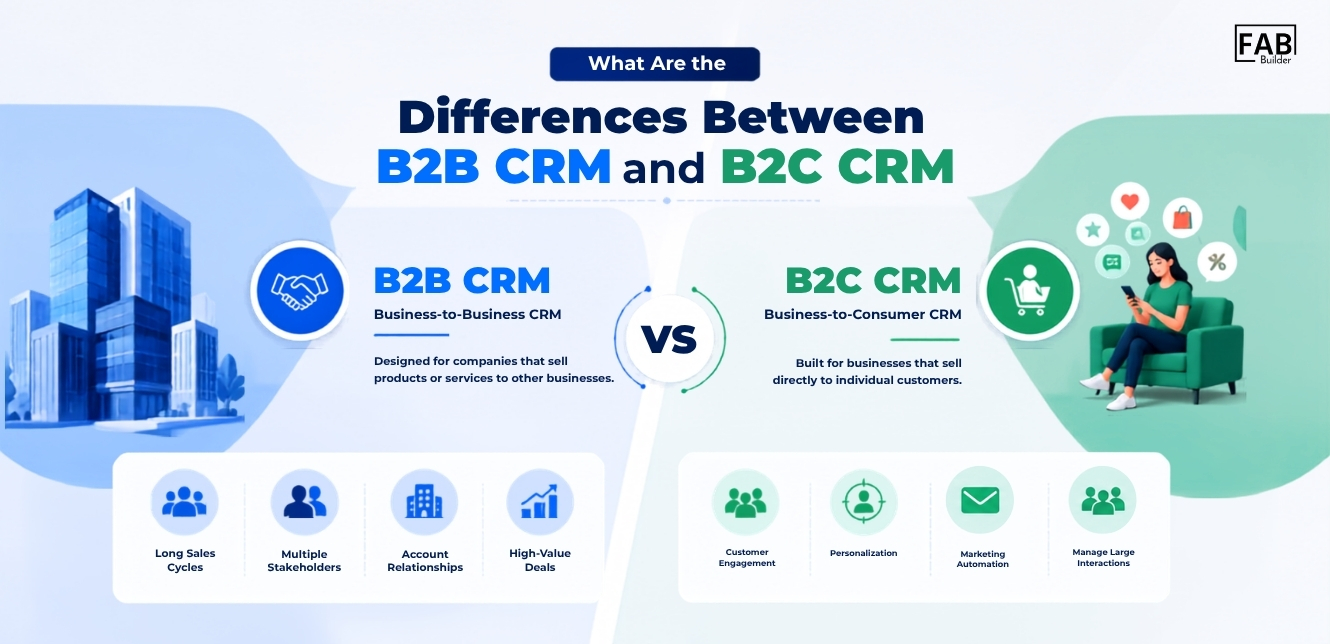
B2B CRM (Business-to-Business CRM) is designed for companies that sell products or services to other businesses. It focuses on managing long sales cycles, multiple stakeholders, account relationships, and high-value deals.
B2C CRM (Business-to-Consumer CRM) is built for businesses that sell directly to individual customers. It emphasizes customer engagement, personalization, marketing automation, and managing large volumes of customer interactions.
B2B CRM vs B2C CRM
| Feature | B2B CRM | B2C CRM |
|---|---|---|
| Target Customers | Businesses, organizations, and enterprises | Individual consumers and end users |
| Sales Cycle | Longer and more complex | Shorter and faster |
| Decision Makers | Multiple stakeholders involved in purchasing decisions | Usually a single buyer or household |
| Relationship Focus | Long-term partnerships and account management | High-volume customer acquisition and retention |
| Lead Volume | Lower volume but higher-value deals | Higher volume with smaller transaction values |
| Sales Process | Consultative and relationship-driven | Transactional and speed-focused |
| Customer Data | Company details, contacts, contracts, and account history | Personal preferences, purchase history, and behavior |
| Automation Needs | Lead nurturing, account management, and pipeline tracking | Marketing automation, personalization, and customer engagement |
| Communication Channels | Email, meetings, calls, and account-based marketing | Email, SMS, social media, chat, and mobile apps |
| Key Metrics | Deal value, pipeline growth, customer lifetime value, renewal rates | Conversion rate, repeat purchases, retention, and customer satisfaction |
| Examples | SaaS companies, manufacturers, consulting firms, wholesalers | E-commerce, retail, travel, and subscription businesses |
| CRM Examples | Salesforce, HubSpot, Microsoft Dynamics | HubSpot, Zoho CRM, Shopify-integrated CRMs |
Conclusion
Understanding the types of CRM software is the foundation of building stronger customer relationships and scaling your business with confidence. From operational CRM software that streamlines daily activities, to analytical CRM that delivers actionable insights, and strategic (collaborative) CRM that focuses on long-term customer value — each CRM type serves a distinct purpose.
The key takeaway is simple: there is no one-size-fits-all CRM. The right CRM depends on your business goals, team structure, customer journey, and growth plans. By clearly understanding the different types of CRMs and how they work, you can avoid costly mistakes and invest in a CRM that delivers real, measurable impact.
This is where FAB CRM stands out. Designed to support multiple CRM types in a single platform, FAB CRM brings together operational efficiency, analytical intelligence, and strategic collaboration — giving businesses the flexibility to start small and scale without limits.
Ready to Choose the Right CRM for Your Business?
Whether you’re a startup, growing business, or enterprise, FAB CRM adapts to your needs, not the other way around.
Explore FAB CRM to streamline customer management, improve team productivity, and build lasting customer relationships — all from one powerful CRM platform.
Frequently Asked Questions
What are CRMs?
CRMs, or Customer Relationship Management systems, are software tools that help businesses manage customer data, track interactions, automate sales and support processes, and improve customer relationships across the entire lifecycle.
What are the main types of CRM software?
The main types of CRM software are:
- Operational CRM software – focuses on automating sales, marketing, and customer support
- Analytical CRM – helps analyze customer data and generate insights
- Collaborative (Strategic) CRM – improves communication and long-term customer relationships
Many modern CRM platforms combine all three types into one solution.
What is operational CRM software used for?
Operational CRM software is used to manage daily customer-facing activities such as lead management, sales pipeline tracking, follow-ups, and customer support. It helps teams work more efficiently and ensures no opportunity or customer request is missed.
What is strategic CRM?
Strategic CRM focuses on building long-term customer relationships rather than short-term transactions. It emphasizes customer value, retention, and collaboration across teams to deliver consistent and personalized experiences.
What are the different types of CRMs available today?
Beyond the core categories, businesses can find different types of CRMs, including:
- Cloud-based CRM
- Industry-specific CRM
- AI-powered CRM
- Custom or enterprise CRM solutions
These are often referred to as different versions of CRM, designed to meet specific business needs.
How do I choose the right CRM type for my business?
To choose the right CRM type, consider:
- Your business goals
- Sales cycle length (B2B vs B2C)
- Team size and workflows
- Reporting and analytics needs
- Future scalability
Understanding the types of CRM program available helps you make a more informed decision.
Can a business use multiple types of CRM software?
Yes. Many modern CRM platforms combine operational, analytical, and collaborative capabilities in a single solution to meet the needs of growing businesses.